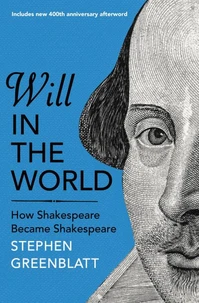
Stephen Greenblatt is Cogan University Professor of the Humanities at Harvard University. He is the author of twelve books, including The Swerve: How the World Became Modern, which won the National Book Award and a Pulitzer Prize, as well as the New York Times bestseller Will in the World: How Shakespeare Became Shakespeare and the classic university text Renaissance Self-Fashioning. He is General Editor of The Norton Anthology of English Literature and of The Norton Shakespeare, and has edited seven collections of literary criticism.
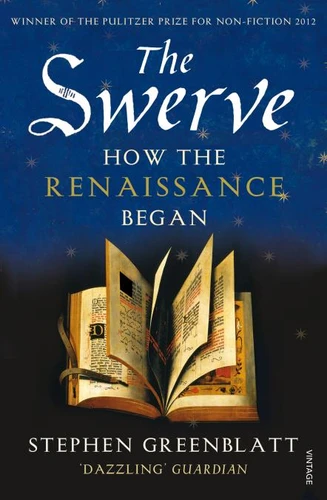
The Swerve : How the Renaissance Began
Par :Formats :
Disponible dans votre compte client Decitre ou Furet du Nord dès validation de votre commande. Le format ePub protégé est :
- Compatible avec une lecture sur My Vivlio (smartphone, tablette, ordinateur)
- Compatible avec une lecture sur liseuses Vivlio
- Pour les liseuses autres que Vivlio, vous devez utiliser le logiciel Adobe Digital Edition. Non compatible avec la lecture sur les liseuses Kindle, Remarkable et Sony
- Non compatible avec un achat hors France métropolitaine
 , qui est-ce ?
Notre partenaire de plateforme de lecture numérique où vous retrouverez l'ensemble de vos ebooks gratuitement
Pour en savoir plus sur nos ebooks, consultez notre aide en ligne ici
C'est si simple ! Lisez votre ebook avec l'app Vivlio sur votre tablette, mobile ou ordinateur :

- Nombre de pages368
- FormatePub
- ISBN978-1-4464-9929-0
- EAN9781446499290
- Date de parution01/09/2011
- Protection num.Adobe DRM
- Infos supplémentairesepub
- ÉditeurVintage Digital
Résumé
A riveting, exemplary tale of the great cultural "swerve" known as the Renaissance. WINNER OF THE PULITZER PRIZE FOR NON-FICTION 2012Almost six hundred years ago, a short, genial man took a very old manuscript off a library shelf. With excitement, he saw what he had discovered and ordered it copied. The book was a miraculously surviving copy of an ancient Roman philosophical epic, On the Nature of Things by Lucretius and it changed the course of history.
He found a beautiful poem of the most dangerous ideas - that the universe functioned without the aid of gods, that religious fear was damaging to human life, and that matter was made up of very small particles in eternal motion. These ideas fuelled the Renaissance, inspiring Botticelli, shaping the thoughts of Montaigne, Darwin, and Einstein. An innovative work of history by one of the world's most celebrated scholars and a thrilling story of discovery, The Swerve details how one manuscript, plucked from a thousand years of neglect, made possible the world as we know it.'Superbly readable...
An exciting story, and Greenblatt tells it with his customary clarity and verve' Robert Douglas-Fairhurst, Daily Telegraph
He found a beautiful poem of the most dangerous ideas - that the universe functioned without the aid of gods, that religious fear was damaging to human life, and that matter was made up of very small particles in eternal motion. These ideas fuelled the Renaissance, inspiring Botticelli, shaping the thoughts of Montaigne, Darwin, and Einstein. An innovative work of history by one of the world's most celebrated scholars and a thrilling story of discovery, The Swerve details how one manuscript, plucked from a thousand years of neglect, made possible the world as we know it.'Superbly readable...
An exciting story, and Greenblatt tells it with his customary clarity and verve' Robert Douglas-Fairhurst, Daily Telegraph
A propos de Stephen Greenblatt
1/5
3.3/5
7,99 €
1/5
3.3/5
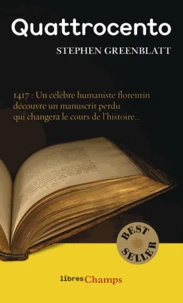
Quattrocento
Poche
8,60 €
13,14 €
1/5
3.3/5
4,40 €
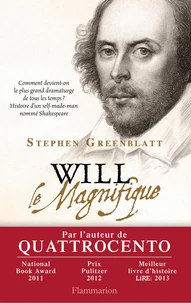
Will le Magnifique - Occasion
Grand Format
12,60 €
11,00 €
10,99 €
11,99 €
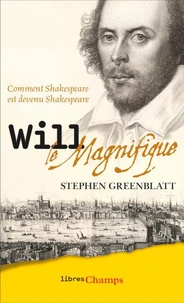
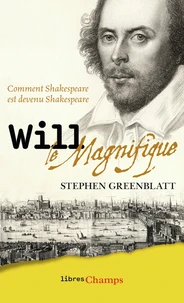
Will le magnifique
E-book
9,99 €
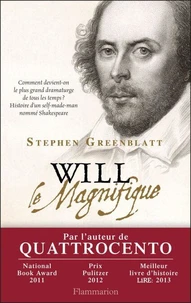
Will le Magnifique
E-book
14,99 €
16,63 €