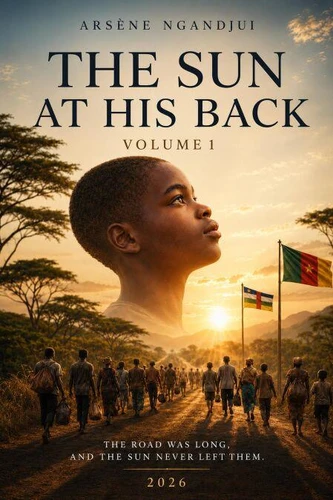
Kassim is eight years old. He lives in Boundi - a village that exists on no map - on the edge of the great equatorial forest in the Central African Republic, with his mother and two little sisters. He dreams of football, of a solid house, of a better life for the people he loves. Then one night, sparks fall from the sky. And everything collapses. What follows is an exodus on foot: burning villages, forest nights, icy rivers, ambushes, armed checkpoints.
Guided by his uncle Ghyslain, walking beside the mysterious Amara, Kassim carries his sisters, his rag ball, and a dream too big for the road he is on. The Sun at My Back tells the story of war at a child's eye level - without speeches, without pathos, with only the raw power of images and gesture. A debut novel of rare literary integrity, set in a territory world fiction has never truly inhabited.
Kassim is eight years old. He lives in Boundi - a village that exists on no map - on the edge of the great equatorial forest in the Central African Republic, with his mother and two little sisters. He dreams of football, of a solid house, of a better life for the people he loves. Then one night, sparks fall from the sky. And everything collapses. What follows is an exodus on foot: burning villages, forest nights, icy rivers, ambushes, armed checkpoints.
Guided by his uncle Ghyslain, walking beside the mysterious Amara, Kassim carries his sisters, his rag ball, and a dream too big for the road he is on. The Sun at My Back tells the story of war at a child's eye level - without speeches, without pathos, with only the raw power of images and gesture. A debut novel of rare literary integrity, set in a territory world fiction has never truly inhabited.

 , qui est-ce ?
