SOLDES
Jusqu'à -70% sur une sélection d'articles*

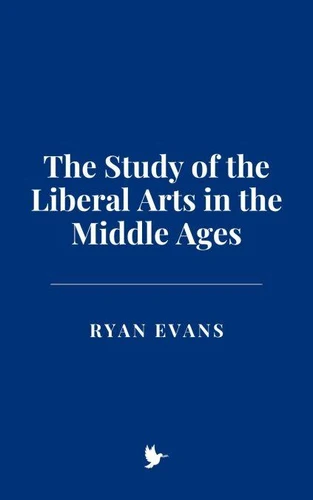
The Study of the Liberal Arts in the Middle Ages
Par :Formats :
Disponible dans votre compte client Decitre ou Furet du Nord dès validation de votre commande. Le format ePub est :
- Compatible avec une lecture sur My Vivlio (smartphone, tablette, ordinateur)
- Compatible avec une lecture sur liseuses Vivlio
- Pour les liseuses autres que Vivlio, vous devez utiliser le logiciel Adobe Digital Edition. Non compatible avec la lecture sur les liseuses Kindle, Remarkable et Sony
 , qui est-ce ?
Notre partenaire de plateforme de lecture numérique où vous retrouverez l'ensemble de vos ebooks gratuitement
Pour en savoir plus sur nos ebooks, consultez notre aide en ligne ici
C'est si simple ! Lisez votre ebook avec l'app Vivlio sur votre tablette, mobile ou ordinateur :

- FormatePub
- ISBN8230335771
- EAN9798230335771
- Date de parution02/02/2025
- Protection num.pas de protection
- Infos supplémentairesepub
- ÉditeurIndependently Published
Résumé
This book offers an in-depth exploration of the intellectual and educational developments during the Middle Ages, with a focus on the history, evolution, and impact of the liberal arts in shaping medieval thought. From the early Christian foundations of monastic learning to the establishment of medieval universities, it traces the role of the seven liberal arts-grammar, rhetoric, logic, arithmetic, geometry, music, and astronomy-in forming the intellectual framework that underpinned theology, philosophy, and the sciences.
The narrative highlights the synthesis of reason and faith that characterized medieval education, particularly through the work of Scholastic thinkers like Thomas Aquinas and Albertus Magnus, who integrated classical philosophy with Christian doctrine. The book also delves into the challenges to this system brought about by the rise of humanism during the Renaissance, the intellectual transformations prompted by the Reformation, and the eventual transition toward modern thought.
By examining key figures, concepts, and primary sources, including the works of Petrarch, Dante, Christine de Pizan, and others, the book illuminates how medieval intellectual traditions were transmitted and adapted in the early modern period. Through the study of art, literature, and philosophy, it demonstrates how medieval education, though focused on religious and moral aims, contributed to the broader intellectual culture that would shape the Renaissance, the Enlightenment, and beyond.
Ultimately, the book emphasizes the lasting legacy of medieval thought in shaping contemporary education, science, law, and political philosophy, ensuring that the principles of the liberal arts continue to influence modern intellectual life.
The narrative highlights the synthesis of reason and faith that characterized medieval education, particularly through the work of Scholastic thinkers like Thomas Aquinas and Albertus Magnus, who integrated classical philosophy with Christian doctrine. The book also delves into the challenges to this system brought about by the rise of humanism during the Renaissance, the intellectual transformations prompted by the Reformation, and the eventual transition toward modern thought.
By examining key figures, concepts, and primary sources, including the works of Petrarch, Dante, Christine de Pizan, and others, the book illuminates how medieval intellectual traditions were transmitted and adapted in the early modern period. Through the study of art, literature, and philosophy, it demonstrates how medieval education, though focused on religious and moral aims, contributed to the broader intellectual culture that would shape the Renaissance, the Enlightenment, and beyond.
Ultimately, the book emphasizes the lasting legacy of medieval thought in shaping contemporary education, science, law, and political philosophy, ensuring that the principles of the liberal arts continue to influence modern intellectual life.
A propos de Ryan Evans


2,99 €


2,99 €


2,99 €


3,99 €

2,99 €
2,99 €