
Nicolas Wiater is a Lecturer in Classics at the University of St Andrews. He has published on late Hellenistic and early Imperial Greek historiography and intellectual culture and is currently working on a book on conceptions of violence in early Greek poetry.
Thomas A. Schmitz teaches Greek language and literature at Bonn University. He has published widely on imperial Greek literature.
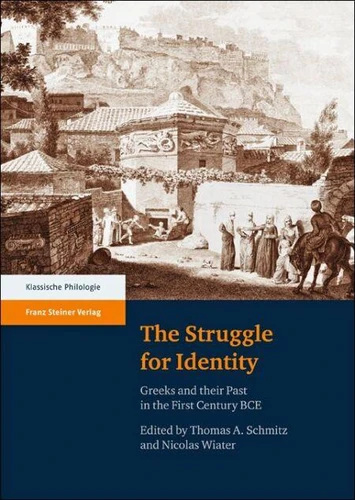
The Struggle for Identity. Greeks and their Past in the First Century BCE
Par : ,Formats :
Disponible dans votre compte client Decitre ou Furet du Nord dès validation de votre commande. Le format PDF est :
- Compatible avec une lecture sur My Vivlio (smartphone, tablette, ordinateur)
- Compatible avec une lecture sur liseuses Vivlio
- Pour les liseuses autres que Vivlio, vous devez utiliser le logiciel Adobe Digital Edition. Non compatible avec la lecture sur les liseuses Kindle, Remarkable et Sony
 , qui est-ce ?
Notre partenaire de plateforme de lecture numérique où vous retrouverez l'ensemble de vos ebooks gratuitement
Pour en savoir plus sur nos ebooks, consultez notre aide en ligne ici
C'est si simple ! Lisez votre ebook avec l'app Vivlio sur votre tablette, mobile ou ordinateur :

- Nombre de pages305
- FormatPDF
- ISBN978-3-515-09936-3
- EAN9783515099363
- Date de parution22/06/2012
- Protection num.Digital Watermarking
- Taille6 Mo
- Infos supplémentairespdf
- ÉditeurFranz Steiner
Résumé
In the first century BCE, Greek intellectuals had to come to terms with the stability of Roman power. Many of them were active in Rome, which became the cultural centre of the Greek world; others were connected with Roman patrons. Their work became important for the emergence of Greek identity in the Roman Empire.
Bringing together an international group of leading Classical scholars, this volume represents the first attempt at a comprehensive study of Greek cultural identity in the first century: how did the Romans influence the Greeks' view(s) of themselves and of their classical heritage? How did the Greeks interpret the Romans and their role in the world? Covering such different genres as historiography, literary criticism, the novel, and epigram, as well as archaeological material, the contributions explore the intellectual diversity of one of the most significant periods in history and situate the authors active under Augustus within their broader intellectual-historical context.