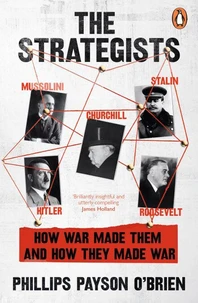
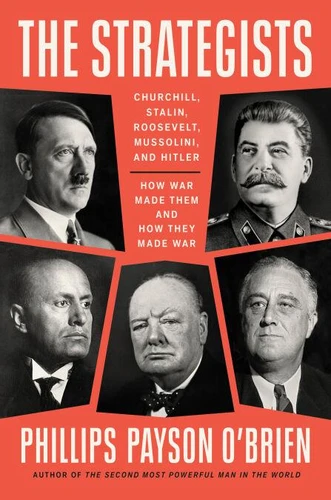
Churchill. Hitler. Stalin. Mussolini. Roosevelt. Five of the most impactful leaders of WW2, each with their own individualistic and idiosyncratic approach to warfare. But if we want to understand their military strategy, we must first understand the strategist. In The Strategists, Professor Phillips Payson O'Brien shows how the views these five leaders forged in WW1 are crucial to understanding how they fought WW2.
For example, Churchill's experiences of facing the German Army in France in 1916 made him unwilling to send masses of British soldiers back there in the 1940s, while Hitler's mistakes on the Eastern Front were influenced by his reluctance to accept that conditions had changed since his own time fighting. The implications of the power of leaders remain with us to this day: to truly understand what is happening in Ukraine, for example, requires us to know what has influenced the leaders involved.
This is a history in which leaders-and their choices-matter. For better or worse.
Churchill. Hitler. Stalin. Mussolini. Roosevelt. Five of the most impactful leaders of WW2, each with their own individualistic and idiosyncratic approach to warfare. But if we want to understand their military strategy, we must first understand the strategist. In The Strategists, Professor Phillips Payson O'Brien shows how the views these five leaders forged in WW1 are crucial to understanding how they fought WW2.
For example, Churchill's experiences of facing the German Army in France in 1916 made him unwilling to send masses of British soldiers back there in the 1940s, while Hitler's mistakes on the Eastern Front were influenced by his reluctance to accept that conditions had changed since his own time fighting. The implications of the power of leaders remain with us to this day: to truly understand what is happening in Ukraine, for example, requires us to know what has influenced the leaders involved.
This is a history in which leaders-and their choices-matter. For better or worse.

 , qui est-ce ?