
The Storm of Creativity
Par : ,Formats :
Disponible dans votre compte client Decitre ou Furet du Nord dès validation de votre commande. Le format ePub protégé est :
- Compatible avec une lecture sur My Vivlio (smartphone, tablette, ordinateur)
- Compatible avec une lecture sur liseuses Vivlio
- Pour les liseuses autres que Vivlio, vous devez utiliser le logiciel Adobe Digital Edition. Non compatible avec la lecture sur les liseuses Kindle, Remarkable et Sony
- Non compatible avec un achat hors France métropolitaine
 , qui est-ce ?
Notre partenaire de plateforme de lecture numérique où vous retrouverez l'ensemble de vos ebooks gratuitement
Pour en savoir plus sur nos ebooks, consultez notre aide en ligne ici
C'est si simple ! Lisez votre ebook avec l'app Vivlio sur votre tablette, mobile ou ordinateur :

- Nombre de pages216
- FormatePub
- ISBN978-0-262-33060-2
- EAN9780262330602
- Date de parution13/11/2015
- Protection num.Adobe DRM
- Taille16 Mo
- Infos supplémentairesepub
- ÉditeurThe MIT Press
Résumé
The stages of the creative process-from "unlearning" to beginning again-seen through examples from the practice of artists, architects, poets, and others. Although each instance of creativity is singular and specific, Kyna Leski tells us, the creative process is universal. Artists, architects, poets, inventors, scientists, and others all navigate the same stages of the process in order to discover something that does not yet exist.
All of us must work our way through the empty page, the blank screen, writer's block, confusion, chaos, and doubt. In this book, Leski draws from her observations and experiences as a teacher, student, maker, writer, and architect to describe the workings of the creative process. Leski sees the creative process as being like a storm; it slowly begins to gather and take form until it overtakes us-if we are willing to let it.
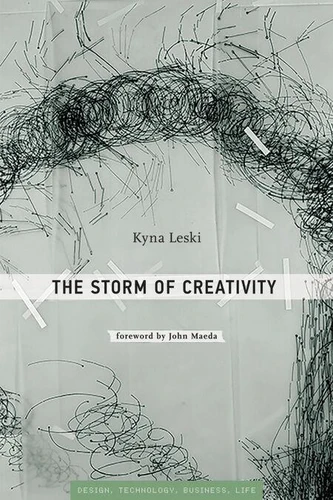
It is dynamic, continually in motion; it starts, stops, rages and abates, ebbs and flows. In illustrations that accompany each chapter, she maps the arc of the creative process by tracing the path of water droplets traveling the stages of a storm. Leski describes unlearning, ridding ourselves of preconceptions; only when we realize what we don't know can we pose the problem that we need to solve. We gather evidence-with notebook jottings, research, the collection of objects-propelling the process.
We perceive and conceive; we look ahead without knowing where we are going; we make connections. We pause, retreat, and stop, only to start again. To illustrate these stages of the process, Leski draws on examples of creative practice that range from Paul Klee to Steve Jobs, from the discovery of continental drift to the design of Antoni Gaudí's Sagrada Familia. Creativity, Leski tells us, is a path with no beginning or end; it is ongoing.
This revelatory view of the creative process will be an essential guide for anyone engaged in creative discovery. The Creative ProcessUnlearningProblem MakingGathering and TrackingPropellingPerceiving and ConceivingSeeing AheadConnectingPausingContinuing
All of us must work our way through the empty page, the blank screen, writer's block, confusion, chaos, and doubt. In this book, Leski draws from her observations and experiences as a teacher, student, maker, writer, and architect to describe the workings of the creative process. Leski sees the creative process as being like a storm; it slowly begins to gather and take form until it overtakes us-if we are willing to let it.
It is dynamic, continually in motion; it starts, stops, rages and abates, ebbs and flows. In illustrations that accompany each chapter, she maps the arc of the creative process by tracing the path of water droplets traveling the stages of a storm. Leski describes unlearning, ridding ourselves of preconceptions; only when we realize what we don't know can we pose the problem that we need to solve. We gather evidence-with notebook jottings, research, the collection of objects-propelling the process.
We perceive and conceive; we look ahead without knowing where we are going; we make connections. We pause, retreat, and stop, only to start again. To illustrate these stages of the process, Leski draws on examples of creative practice that range from Paul Klee to Steve Jobs, from the discovery of continental drift to the design of Antoni Gaudí's Sagrada Familia. Creativity, Leski tells us, is a path with no beginning or end; it is ongoing.
This revelatory view of the creative process will be an essential guide for anyone engaged in creative discovery. The Creative ProcessUnlearningProblem MakingGathering and TrackingPropellingPerceiving and ConceivingSeeing AheadConnectingPausingContinuing