SOLDES
Jusqu'à -70% sur une sélection d'articles*

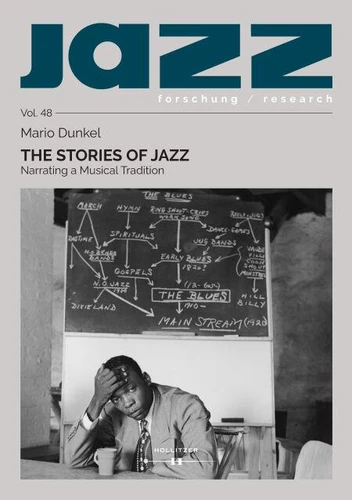
The Stories of Jazz. Narrating a Musical Tradition
Par : , ,Formats :
Disponible dans votre compte client Decitre ou Furet du Nord dès validation de votre commande. Le format PDF est :
- Compatible avec une lecture sur My Vivlio (smartphone, tablette, ordinateur)
- Compatible avec une lecture sur liseuses Vivlio
- Pour les liseuses autres que Vivlio, vous devez utiliser le logiciel Adobe Digital Edition. Non compatible avec la lecture sur les liseuses Kindle, Remarkable et Sony
 , qui est-ce ?
Notre partenaire de plateforme de lecture numérique où vous retrouverez l'ensemble de vos ebooks gratuitement
Pour en savoir plus sur nos ebooks, consultez notre aide en ligne ici
C'est si simple ! Lisez votre ebook avec l'app Vivlio sur votre tablette, mobile ou ordinateur :

- Nombre de pages404
- FormatPDF
- ISBN978-3-99012-895-4
- EAN9783990128954
- Date de parution22/09/2021
- Protection num.Digital Watermarking
- Taille21 Mo
- Infos supplémentairespdf
- ÉditeurHollitzer Wissenschaftsverlag
Résumé
New Orleans jazz, Dixieland, Chicago jazz, swing, bebop, cool jazz, hard bop, and free jazz: up until today, the history of jazz is told as a "tradition" consisting of fixed components including a succession of jazz styles. How did this construction of music history emerge? What were the alternative perspectives? And why did the narrative of a fixed tradition catch on?
In this study, Mario Dunkel examines narratives of jazz history from the beginnings of jazz until the late 1950s.
According to Dunkel, the jazz tradition is simultaneously an attempt to approach historical reality and the product of competition between different narratives and cultural myths. From the middlebrow culture of the 1920s to the New Deal, the African American civil rights movement and the role of the U. S. in the Cold War, Dunkel shows in detail how the jazz tradition, as a global narrative of the twentieth century, is intertwined with greater social and cultural developments.
According to Dunkel, the jazz tradition is simultaneously an attempt to approach historical reality and the product of competition between different narratives and cultural myths. From the middlebrow culture of the 1920s to the New Deal, the African American civil rights movement and the role of the U. S. in the Cold War, Dunkel shows in detail how the jazz tradition, as a global narrative of the twentieth century, is intertwined with greater social and cultural developments.