SOLDES
Jusqu'à -70% sur une sélection d'articles*

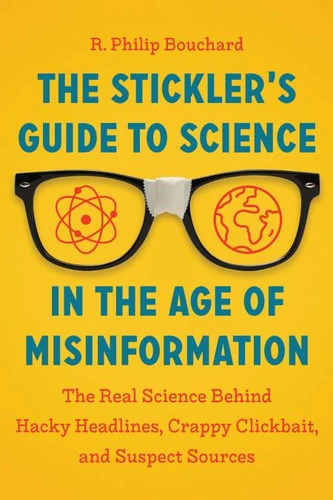
The Stickler's Guide to Science in the Age of Misinformation. The Real Science Behind Hacky Headlines, Crappy Clickbait, and Suspect Sources
Par :Formats :
Disponible dans votre compte client Decitre ou Furet du Nord dès validation de votre commande. Le format ePub protégé est :
- Compatible avec une lecture sur My Vivlio (smartphone, tablette, ordinateur)
- Compatible avec une lecture sur liseuses Vivlio
- Pour les liseuses autres que Vivlio, vous devez utiliser le logiciel Adobe Digital Edition. Non compatible avec la lecture sur les liseuses Kindle, Remarkable et Sony
- Non compatible avec un achat hors France métropolitaine
 , qui est-ce ?
Notre partenaire de plateforme de lecture numérique où vous retrouverez l'ensemble de vos ebooks gratuitement
Pour en savoir plus sur nos ebooks, consultez notre aide en ligne ici
C'est si simple ! Lisez votre ebook avec l'app Vivlio sur votre tablette, mobile ou ordinateur :

- Nombre de pages280
- FormatePub
- ISBN978-1-64326-129-4
- EAN9781643261294
- Date de parution22/11/2021
- Protection num.Adobe DRM
- Infos supplémentairesepub
- ÉditeurTimber Press
Résumé
The perfect remedy for our culture of fake news, bad science, and propaganda. We have more scientific information at our fingertips today than ever before. And more disinformation too. Online, on television, and in print, science is often communicated through shorthand analogies and phrases that obscure or omit important facts. "Superfoods, " "right- and left-brained" people, and "global warming" may be snappy and ear-catching but are they backed by scientific facts? Lifelong educator R.
Philip Bouchard is a stickler for this kind of thing, and he is well-prepared to set the record straight. The Stickler's Guide to Science in the Age of Misinformation unpacks the many misuses of terms we see used every day, revealing how these popular "scientific" concepts fall short of real science. Find out why trees do not "store" carbon dioxide; a day is not actually 24 hours; DNA cannot provide a "blueprint" for a human being; and an absence of gravity is not the reason that astronauts float in space.
Philip Bouchard is a stickler for this kind of thing, and he is well-prepared to set the record straight. The Stickler's Guide to Science in the Age of Misinformation unpacks the many misuses of terms we see used every day, revealing how these popular "scientific" concepts fall short of real science. Find out why trees do not "store" carbon dioxide; a day is not actually 24 hours; DNA cannot provide a "blueprint" for a human being; and an absence of gravity is not the reason that astronauts float in space.