SOLDES
Jusqu'à -70% sur une sélection d'articles*

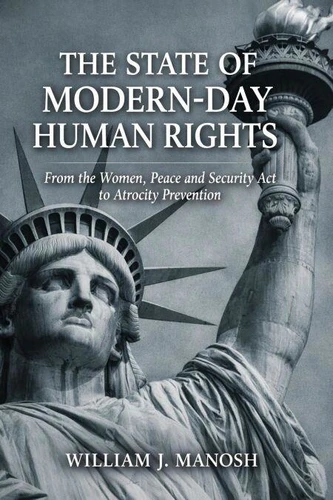
The State of Modern-Day Human Rights:From The Women, Peace, and Security Act to Atrocity Prevention
Par :Formats :
Disponible dans votre compte client Decitre ou Furet du Nord dès validation de votre commande. Le format ePub est :
- Compatible avec une lecture sur My Vivlio (smartphone, tablette, ordinateur)
- Compatible avec une lecture sur liseuses Vivlio
- Pour les liseuses autres que Vivlio, vous devez utiliser le logiciel Adobe Digital Edition. Non compatible avec la lecture sur les liseuses Kindle, Remarkable et Sony
 , qui est-ce ?
Notre partenaire de plateforme de lecture numérique où vous retrouverez l'ensemble de vos ebooks gratuitement
Pour en savoir plus sur nos ebooks, consultez notre aide en ligne ici
C'est si simple ! Lisez votre ebook avec l'app Vivlio sur votre tablette, mobile ou ordinateur :

- FormatePub
- ISBN8994451038
- EAN9798994451038
- Date de parution23/01/2026
- Protection num.pas de protection
- Infos supplémentairesepub
- ÉditeurGroupe Business Thérapie
Résumé
The State of Modern-Day Human Rights examines how contemporary human-rights commitments function in practice-and where they consistently fail. Moving beyond abstract moral claims, William J. Manosh analyzes how human rights are defined, enforced, and selectively applied through law, policy, and political power. Focusing on U. S. human-rights policy in the modern era, the book traces the institutional evolution of landmark frameworks such as the Women, Peace and Security Act and atrocity-prevention initiatives.
Through case studies including Venezuela, Xinjiang, migration enforcement, and elite accountability, Manosh reveals patterns of consistency, contradiction, and selective moral emphasis within the global human-rights system. Clear-eyed and accessible, this book offers a grounded examination of how human rights are operationalized by governments-and why the gap between principle and practice continues to shape global outcomes.
Through case studies including Venezuela, Xinjiang, migration enforcement, and elite accountability, Manosh reveals patterns of consistency, contradiction, and selective moral emphasis within the global human-rights system. Clear-eyed and accessible, this book offers a grounded examination of how human rights are operationalized by governments-and why the gap between principle and practice continues to shape global outcomes.