SOLDES
Jusqu'à -70% sur une sélection d'articles*

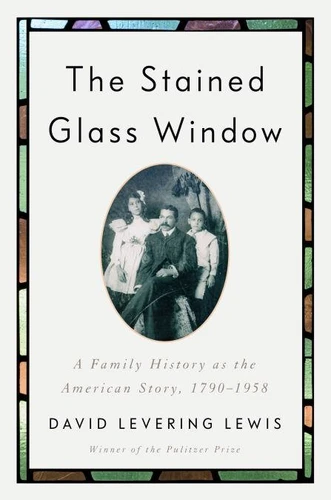
The Stained Glass Window. A Family History as the American Story, 1790-1958
Par :Formats :
Disponible dans votre compte client Decitre ou Furet du Nord dès validation de votre commande. Le format ePub protégé est :
- Compatible avec une lecture sur My Vivlio (smartphone, tablette, ordinateur)
- Compatible avec une lecture sur liseuses Vivlio
- Pour les liseuses autres que Vivlio, vous devez utiliser le logiciel Adobe Digital Edition. Non compatible avec la lecture sur les liseuses Kindle, Remarkable et Sony
- Non compatible avec un achat hors France métropolitaine
 , qui est-ce ?
Notre partenaire de plateforme de lecture numérique où vous retrouverez l'ensemble de vos ebooks gratuitement
Pour en savoir plus sur nos ebooks, consultez notre aide en ligne ici
C'est si simple ! Lisez votre ebook avec l'app Vivlio sur votre tablette, mobile ou ordinateur :

- Nombre de pages384
- FormatePub
- ISBN978-1-9848-7991-2
- EAN9781984879912
- Date de parution11/02/2025
- Protection num.Adobe DRM
- Taille22 Mo
- Infos supplémentairesepub
- ÉditeurPenguin Press
Résumé
A Top 100 Book by the Schomburg Library"At once narrative history, family chronicle and personal memoir. [a] luminous work of investigation and introspection." -Wall Street Journal National Humanities Medal recipient and two-time recipient of the Pulitzer Prize David Levering Lewis's own family history that shifts our understanding of the larger American storySitting beneath a stained glass window dedicated to his grandmother in the Atlanta church where his family had prayed for generations, preeminent American historian David Levering Lewis was struck by the great lacunae in what he could know about his own ancestors.
He vowed to excavate their past and tell their story. There is no singular American story. Yet the Lewis family contains many defining ones. David Levering Lewis's lineage leads him to the Kings and Belvinses, two white slaveholding families in Georgia; to the Bells, a free persons of color slaveholding family in South Carolina; and to the Lewises, an up-from-slavery black family in Georgia. Lewis's father, John Henry Lewis Sr., set Lewis on the path he pursues, introducing him to W.
E. B. Du Bois and living by example as Thurgood Marshall's collaborator in a key civil rights case in Little Rock. In The Stained Glass Window, Lewis reckons with his legacy in full, facing his ancestors and all that was lost, all the doors that were closed to them. In this country, the bonds of kinship and the horrific fetters of slavery are bound up together. The fight for equity, the loud echoes of the antebellum period in our present, and narratives of exceptionalism are ever with us; in these pages, so, too, are the voices of Clarissa, Isaac, Hattie, Alice, and John.
They shaped this nation, and their heir David Levering Lewis's chronicle of the antebellum project and the subsequent era of marginalization and resistance will transform our understanding of it.
He vowed to excavate their past and tell their story. There is no singular American story. Yet the Lewis family contains many defining ones. David Levering Lewis's lineage leads him to the Kings and Belvinses, two white slaveholding families in Georgia; to the Bells, a free persons of color slaveholding family in South Carolina; and to the Lewises, an up-from-slavery black family in Georgia. Lewis's father, John Henry Lewis Sr., set Lewis on the path he pursues, introducing him to W.
E. B. Du Bois and living by example as Thurgood Marshall's collaborator in a key civil rights case in Little Rock. In The Stained Glass Window, Lewis reckons with his legacy in full, facing his ancestors and all that was lost, all the doors that were closed to them. In this country, the bonds of kinship and the horrific fetters of slavery are bound up together. The fight for equity, the loud echoes of the antebellum period in our present, and narratives of exceptionalism are ever with us; in these pages, so, too, are the voices of Clarissa, Isaac, Hattie, Alice, and John.
They shaped this nation, and their heir David Levering Lewis's chronicle of the antebellum project and the subsequent era of marginalization and resistance will transform our understanding of it.