SOLDES
Jusqu'à -70% sur une sélection d'articles*

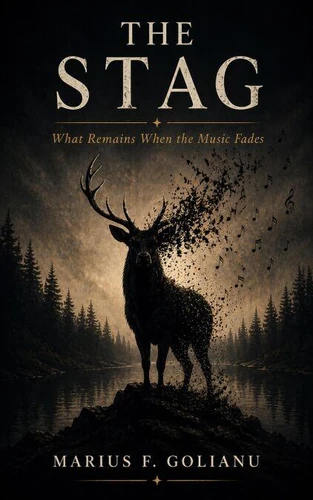
The Stag - What Remains When The Music Fades
Par :Formats :
Disponible dans votre compte client Decitre ou Furet du Nord dès validation de votre commande. Le format ePub est :
- Compatible avec une lecture sur My Vivlio (smartphone, tablette, ordinateur)
- Compatible avec une lecture sur liseuses Vivlio
- Pour les liseuses autres que Vivlio, vous devez utiliser le logiciel Adobe Digital Edition. Non compatible avec la lecture sur les liseuses Kindle, Remarkable et Sony
 , qui est-ce ?
Notre partenaire de plateforme de lecture numérique où vous retrouverez l'ensemble de vos ebooks gratuitement
Pour en savoir plus sur nos ebooks, consultez notre aide en ligne ici
C'est si simple ! Lisez votre ebook avec l'app Vivlio sur votre tablette, mobile ou ordinateur :

- FormatePub
- ISBN8233257308
- EAN9798233257308
- Date de parution29/04/2026
- Protection num.pas de protection
- Infos supplémentairesepub
- ÉditeurLinda Balsamo
Résumé
The Stag: What Remains When the Music Fades is a reflective, atmospheric journey through memory, identity, and the quiet spaces that remain when life stops making noise. At its core, this is a book about what we carry when everything external falls away. It moves through moments of silence, emotional fragments, and inner landscapes shaped by love, loss, and the passage of time. The stag becomes a central figure of stillness and awareness-an observer moving through a world that is constantly changing, yet never fully letting go of what it has already taken in.
The writing explores how memories persist, how meaning is reconstructed after change, and how a person learns to sit with what cannot be undone. It is not a linear narrative, but a series of emotional impressions and reflections that build toward a deeper understanding of presence, absence, and acceptance. Throughout the book, themes of solitude and resilience appear repeatedly, not as dramatic declarations, but as quiet recognitions.
There is music in the background of these pages, even when it fades-suggesting that what we hear internally often outlasts what the world allows us to keep. This is a contemplative work for readers who are drawn to introspective storytelling, symbolic imagery, and emotional depth. It invites pause rather than urgency, reflection rather than resolution, and asks what remains when everything unnecessary has fallen away.
In the end, The Stag is less about answers and more about attention-what we notice, what we remember, and what continues to exist quietly within us even after the noise is gone.
The writing explores how memories persist, how meaning is reconstructed after change, and how a person learns to sit with what cannot be undone. It is not a linear narrative, but a series of emotional impressions and reflections that build toward a deeper understanding of presence, absence, and acceptance. Throughout the book, themes of solitude and resilience appear repeatedly, not as dramatic declarations, but as quiet recognitions.
There is music in the background of these pages, even when it fades-suggesting that what we hear internally often outlasts what the world allows us to keep. This is a contemplative work for readers who are drawn to introspective storytelling, symbolic imagery, and emotional depth. It invites pause rather than urgency, reflection rather than resolution, and asks what remains when everything unnecessary has fallen away.
In the end, The Stag is less about answers and more about attention-what we notice, what we remember, and what continues to exist quietly within us even after the noise is gone.