
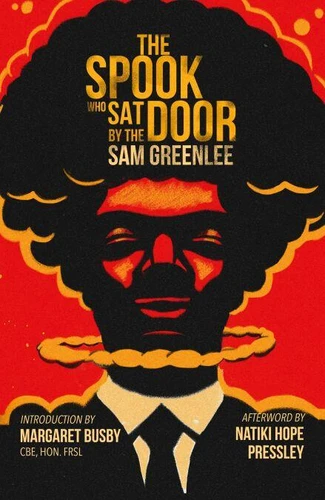
The Spook Who Sat By The Door: The first Black man in the CIA (2024)
Par :Formats :
Disponible dans votre compte client Decitre ou Furet du Nord dès validation de votre commande. Le format ePub est :
- Compatible avec une lecture sur My Vivlio (smartphone, tablette, ordinateur)
- Compatible avec une lecture sur liseuses Vivlio
- Pour les liseuses autres que Vivlio, vous devez utiliser le logiciel Adobe Digital Edition. Non compatible avec la lecture sur les liseuses Kindle, Remarkable et Sony
 , qui est-ce ?
Notre partenaire de plateforme de lecture numérique où vous retrouverez l'ensemble de vos ebooks gratuitement
Pour en savoir plus sur nos ebooks, consultez notre aide en ligne ici
C'est si simple ! Lisez votre ebook avec l'app Vivlio sur votre tablette, mobile ou ordinateur :

- Nombre de pages280
- FormatePub
- ISBN978-1-914344-42-8
- EAN9781914344428
- Date de parution10/10/2024
- Protection num.Digital Watermarking
- Taille2 Mo
- Infos supplémentairesepub
- ÉditeurJacaranda Books
Résumé
Continuously available in print since 1969, this novel has become embedded in progressive anti-racist culture with wide circulation of the book and hotly debated film. A literary classic, The Spook Who Sat by the Door is a strong comment on entrenched racial inequities in the United States in the late 1960s.
Dan Freeman, 'the spook who sat by the door', is enlisted in the CIA's elitist espionage program after a white senator decries the lack of Black officers in the agency.
The first Black man in the Central Intelligence Agency, Freeman is given a desk job. Despite excelling, promotions are hard to come by as the token black in the CIA. Deciding he's had enough, Freeman uses the tactics he learns in the CIA to foment violent rebellion in Chicago, in a mirror image of the coups wrought around the world by the Agency itself. With its focus on the militancy that characterised the Black Power movement of the 1960s and 1970s, this is the story of one man's reaction to ruling-class hypocrisy in ways that make the novel autobiographical and personal.
As a tale of a reaction to the forces of oppression, this brilliant and funny satire by Sam Greenlee proves to be just as potent today as it was when it originally was published.
The first Black man in the Central Intelligence Agency, Freeman is given a desk job. Despite excelling, promotions are hard to come by as the token black in the CIA. Deciding he's had enough, Freeman uses the tactics he learns in the CIA to foment violent rebellion in Chicago, in a mirror image of the coups wrought around the world by the Agency itself. With its focus on the militancy that characterised the Black Power movement of the 1960s and 1970s, this is the story of one man's reaction to ruling-class hypocrisy in ways that make the novel autobiographical and personal.
As a tale of a reaction to the forces of oppression, this brilliant and funny satire by Sam Greenlee proves to be just as potent today as it was when it originally was published.