SOLDES
Jusqu'à -70% sur une sélection d'articles*

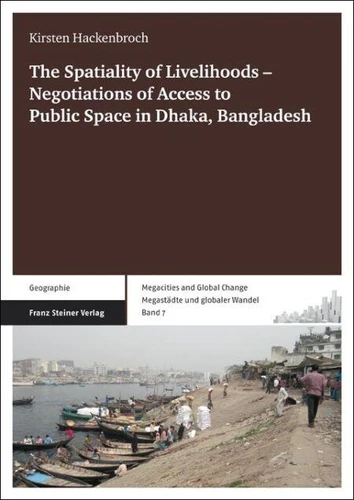
The Spatiality of Livelihoods – Negotiations of Access to Public Space in Dhaka, Bangladesh
Par :Formats :
Disponible dans votre compte client Decitre ou Furet du Nord dès validation de votre commande. Le format PDF est :
- Compatible avec une lecture sur My Vivlio (smartphone, tablette, ordinateur)
- Compatible avec une lecture sur liseuses Vivlio
- Pour les liseuses autres que Vivlio, vous devez utiliser le logiciel Adobe Digital Edition. Non compatible avec la lecture sur les liseuses Kindle, Remarkable et Sony
 , qui est-ce ?
Notre partenaire de plateforme de lecture numérique où vous retrouverez l'ensemble de vos ebooks gratuitement
Pour en savoir plus sur nos ebooks, consultez notre aide en ligne ici
C'est si simple ! Lisez votre ebook avec l'app Vivlio sur votre tablette, mobile ou ordinateur :

- Nombre de pages396
- FormatPDF
- ISBN978-3-515-10340-4
- EAN9783515103404
- Date de parution26/11/2012
- Protection num.Digital Watermarking
- Taille8 Mo
- Infos supplémentairespdf
- ÉditeurFranz Steiner
Résumé
Access to public space is an essential asset of urban livelihoods. Pavements, street spaces, vacant plots, public parks and city squares are used intensively for all kinds of activities. As open space in rapidly growing and poorly planned conurbations is a very scarce resource, it is highly contested between different groups pursuing strongly vested economic, social and cultural interests.
The research for this e-book is grounded in Bangladesh's megacity Dhaka, where more than 300, 000 additional inhabitants have to be accommodated every year in highly densified settlements.
Empirical evidence collected in a consolidated inner-city settlement with low to middle-income residents and in a low-income settlement without planning approval serves as the basis for analysis. Following a grounded theory approach that integrates elements of ethnographic research, the author applies a complex and innovative set of qualitative methods. With the newly coined term "spatiality of (urban) livelihoods" the research deconstructs the nexus between poverty and urban space in the everyday life of urban dwellers and systematises the negotiations for access to this scarce resource.
The emerging actor constellations and power relations in negotiations are embedded in the recent discourses on urban informality and spatialities of (in)justice.
Empirical evidence collected in a consolidated inner-city settlement with low to middle-income residents and in a low-income settlement without planning approval serves as the basis for analysis. Following a grounded theory approach that integrates elements of ethnographic research, the author applies a complex and innovative set of qualitative methods. With the newly coined term "spatiality of (urban) livelihoods" the research deconstructs the nexus between poverty and urban space in the everyday life of urban dwellers and systematises the negotiations for access to this scarce resource.
The emerging actor constellations and power relations in negotiations are embedded in the recent discourses on urban informality and spatialities of (in)justice.