OFFRE LISEUSES
Une liseuse achetée = une housse offerte* jusqu'au 21 juin

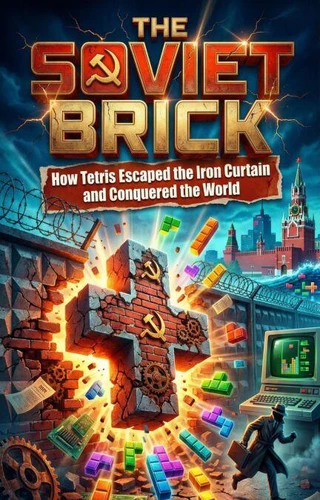
The Soviet Brick. How Tetris Escaped the Iron Curtain and Conquered the World
Par :Formats :
Disponible dans votre compte client Decitre ou Furet du Nord dès validation de votre commande. Le format ePub est :
- Compatible avec une lecture sur My Vivlio (smartphone, tablette, ordinateur)
- Compatible avec une lecture sur liseuses Vivlio
- Pour les liseuses autres que Vivlio, vous devez utiliser le logiciel Adobe Digital Edition. Non compatible avec la lecture sur les liseuses Kindle, Remarkable et Sony
 , qui est-ce ?
Notre partenaire de plateforme de lecture numérique où vous retrouverez l'ensemble de vos ebooks gratuitement
Pour en savoir plus sur nos ebooks, consultez notre aide en ligne ici
C'est si simple ! Lisez votre ebook avec l'app Vivlio sur votre tablette, mobile ou ordinateur :

- Nombre de pages160
- FormatePub
- ISBN978-3-565-22237-7
- EAN9783565222377
- Date de parution03/02/2026
- Protection num.pas de protection
- Taille644 Ko
- Infos supplémentairesepub
- ÉditeurEmphaloz Publishing House
Résumé
It is the most played video game in history, but its origin story is a Cold War thriller. Tech historian Oliver Reed tells the story of Tetris in "The Soviet Brick." Created by Alexey Pajitnov in a Moscow computer lab in 1984, the game was technically owned by the Soviet state.
Reed details the chaotic battle for the rights, involving shady British tycoons, KGB agents, and Nintendo executives flying to Moscow in secret.
He explains how the game's hypnotic "Tetris Effect" bridged the ideological divide, becoming the first piece of Soviet software to enter the US market. The book is a study of genius and exploitation-Pajitnov didn't see a dime of royalties for a decade-and the chaotic transition from communism to capitalism. It's the story of how seven geometric shapes brought down walls that diplomacy couldn't.
He explains how the game's hypnotic "Tetris Effect" bridged the ideological divide, becoming the first piece of Soviet software to enter the US market. The book is a study of genius and exploitation-Pajitnov didn't see a dime of royalties for a decade-and the chaotic transition from communism to capitalism. It's the story of how seven geometric shapes brought down walls that diplomacy couldn't.