SOLDES
Jusqu'à -70% sur une sélection d'articles*

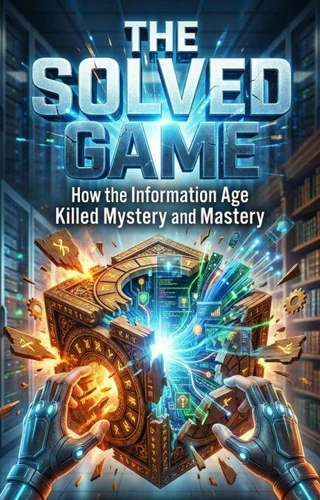
The Solved Game. How the Information Age Killed Mystery and Mastery
Par :Formats :
Disponible dans votre compte client Decitre ou Furet du Nord dès validation de votre commande. Le format ePub est :
- Compatible avec une lecture sur My Vivlio (smartphone, tablette, ordinateur)
- Compatible avec une lecture sur liseuses Vivlio
- Pour les liseuses autres que Vivlio, vous devez utiliser le logiciel Adobe Digital Edition. Non compatible avec la lecture sur les liseuses Kindle, Remarkable et Sony
 , qui est-ce ?
Notre partenaire de plateforme de lecture numérique où vous retrouverez l'ensemble de vos ebooks gratuitement
Pour en savoir plus sur nos ebooks, consultez notre aide en ligne ici
C'est si simple ! Lisez votre ebook avec l'app Vivlio sur votre tablette, mobile ou ordinateur :

- Nombre de pages173
- FormatePub
- ISBN978-3-565-21293-4
- EAN9783565212934
- Date de parution30/01/2026
- Protection num.pas de protection
- Taille596 Ko
- Infos supplémentairesepub
- ÉditeurEmphaloz Publishing House
Résumé
In the 90s, getting stuck in a video game meant asking friends or waiting for a magazine. Today, the optimal strategy for every game is available on a Wiki before the game even launches. Game journalist Alex Mercer explores "The Solved Game, " a phenomenon where dataminers, guides, and the obsession with "meta" efficiency have stripped gaming of wonder.
Mercer argues that players are now optimizing the fun out of their own experiences.
Instead of exploring, they follow a YouTube walkthrough to get the "best" loot immediately. He analyzes the rise of "theory-crafting" communities and how developers are forced to design increasingly obscure secrets just to keep them hidden for more than an hour. The book also touches on the psychological cost: the anxiety of playing "sub-optimally" and the loss of the communal discovery experience.
It is a nostalgic yet critical look at how the internet solved everything, and why we miss the days when we didn't know what was over the next hill.
Instead of exploring, they follow a YouTube walkthrough to get the "best" loot immediately. He analyzes the rise of "theory-crafting" communities and how developers are forced to design increasingly obscure secrets just to keep them hidden for more than an hour. The book also touches on the psychological cost: the anxiety of playing "sub-optimally" and the loss of the communal discovery experience.
It is a nostalgic yet critical look at how the internet solved everything, and why we miss the days when we didn't know what was over the next hill.
A propos de Alex Mercer


The Weight of Innocence
E-book
4,49 €