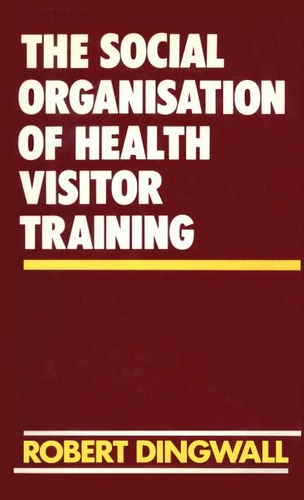
The Social Organisation of Health Visitor Training
Par :Formats :
Disponible dans votre compte client Decitre ou Furet du Nord dès validation de votre commande. Le format ePub est :
- Compatible avec une lecture sur My Vivlio (smartphone, tablette, ordinateur)
- Compatible avec une lecture sur liseuses Vivlio
- Pour les liseuses autres que Vivlio, vous devez utiliser le logiciel Adobe Digital Edition. Non compatible avec la lecture sur les liseuses Kindle, Remarkable et Sony
 , qui est-ce ?
Notre partenaire de plateforme de lecture numérique où vous retrouverez l'ensemble de vos ebooks gratuitement
Pour en savoir plus sur nos ebooks, consultez notre aide en ligne ici
C'est si simple ! Lisez votre ebook avec l'app Vivlio sur votre tablette, mobile ou ordinateur :

- FormatePub
- ISBN978-1-61027-221-6
- EAN9781610272216
- Date de parution26/12/2013
- Protection num.pas de protection
- Infos supplémentairesepub
- ÉditeurMark Childress
Résumé
Robert Dingwall's classic and original study of the training of health visitors (public health nurses) in the UK is now available in a convenient ebook edition, featuring linked notes, all tables from the print edition, linked subject index, and active Contents. This book has not been easily available in print for many years but has long been regarded as an important contribution to the study of professional socialization.
It was one of the first studies to incorporate ideas from ethnomethodology into an ethnographic approach to studying health visitors, proposing that education should be thought of as the production of competence rather than the internalization of knowledge. The training programme is examined as an organization, to which both faculty and students contribute. This programme is also embedded in a wider set of social relations as the students--predominantly women--negotiate the place of their studies within the other demands on their lives in the context of the 1970s.
In the process, the book reveals the efforts and possible success of the professionalisation process of this subset of medical service providers; its qualitative empiricism is a model for research that opens up the health visitor position (much like the "physician assistant" or PA in the US who travels to patients and implements the medical practice of a larger network) to a broader conceptualisation of its location in the medical profession.'The Social Organisation of Health Visitor Training' is rich in data from extensive interviews and participant observation that sympathetically convey the transformative experience of advanced education and the hopes of progressive professional practice in its time and place.
Its republication will interest anyone concerned with research and policy on professional education, on the possibilities of public health interventions, on the visions of welfare at the eve of the neo-liberal takeover of public policy discourse, and on a similar but later process emerging in the US over the professionalisation of physician assistants and other traveling, hands-on medical providers.
It was one of the first studies to incorporate ideas from ethnomethodology into an ethnographic approach to studying health visitors, proposing that education should be thought of as the production of competence rather than the internalization of knowledge. The training programme is examined as an organization, to which both faculty and students contribute. This programme is also embedded in a wider set of social relations as the students--predominantly women--negotiate the place of their studies within the other demands on their lives in the context of the 1970s.
In the process, the book reveals the efforts and possible success of the professionalisation process of this subset of medical service providers; its qualitative empiricism is a model for research that opens up the health visitor position (much like the "physician assistant" or PA in the US who travels to patients and implements the medical practice of a larger network) to a broader conceptualisation of its location in the medical profession.'The Social Organisation of Health Visitor Training' is rich in data from extensive interviews and participant observation that sympathetically convey the transformative experience of advanced education and the hopes of progressive professional practice in its time and place.
Its republication will interest anyone concerned with research and policy on professional education, on the possibilities of public health interventions, on the visions of welfare at the eve of the neo-liberal takeover of public policy discourse, and on a similar but later process emerging in the US over the professionalisation of physician assistants and other traveling, hands-on medical providers.