
Nouveauté
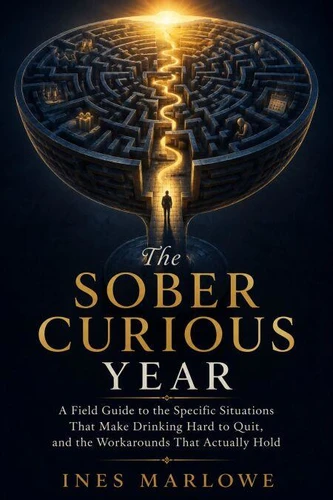
The Sober Curious Year. A Field Guide to the Specific Situations That Make Drinking Hard to Quit
Par :Formats :
Disponible dans votre compte client Decitre ou Furet du Nord dès validation de votre commande. Le format ePub est :
- Compatible avec une lecture sur My Vivlio (smartphone, tablette, ordinateur)
- Compatible avec une lecture sur liseuses Vivlio
- Pour les liseuses autres que Vivlio, vous devez utiliser le logiciel Adobe Digital Edition. Non compatible avec la lecture sur les liseuses Kindle, Remarkable et Sony
 , qui est-ce ?
Notre partenaire de plateforme de lecture numérique où vous retrouverez l'ensemble de vos ebooks gratuitement
Pour en savoir plus sur nos ebooks, consultez notre aide en ligne ici
C'est si simple ! Lisez votre ebook avec l'app Vivlio sur votre tablette, mobile ou ordinateur :

- FormatePub
- ISBN8905161001
- EAN9798905161001
- Date de parution29/06/2026
- Protection num.pas de protection
- Taille532 Ko
- Infos supplémentairesepub
- ÉditeurChiify
Résumé
The sober curious year, how to stay sober at parties and weddings, sober curious for the gray area drinker, and a field guide to quitting drinking situation by situation - from a recovery coach sober since 2009.
You can sit through three sober Christmases and then crack at a Tuesday afternoon barbecue you did not even want to attend. You can quit drinking for nine months on willpower alone and then book a flight to Rome and forget every reason.
Ines Marlowe has been there: twenty-five years of drinking that ended in a Portland kitchen with her hand on a wine bottle she had already opened twice that week. This is not a memoir of decline and redemption and it is not a workbook with fillable boxes. It is a field guide to the next eleven months of your life, organized by the small specific situations that actually make drinking hard to quit. Most quit-lit assumes you are a single kind of person at a single point in the arc.
You are not. So this sober curious guide is built around sixty real situations - the bar birthday, the wedding toast, the friend's cookout, the Sunday at four, the wine aisle after a hard day, the hotel room alone, the late-night internet, the slip and the climb back. For each one, Marlowe gives you the worked example a recovery coach would give a client across the table: here is what the situation does to a brain trying to quit, here is what I would actually do, and here is what I would do if I broke the first part of the plan.
No rock-bottom theory. No California sober hand-waving. Just workarounds that hold. Inside this sober curious field guide: A three-part plan for every drinking event - The entrance plan, the glass plan, and the exit plan, plus the one fallback that beats willpower: you drove yourself, and the car is your escape pod The bartender deal and the club-soda-with-three-limes trick - How to stay sober at weddings and bars without the half-sip-and-pretend strategy that teaches your body the rules bend The Sunday at four, solved - The rebuttal that works on solo drinking is not a fear sentence or a rule sentence; it is a sentence about the project, plus a toolkit for the empty hours the head will try to refill The wine aisle route - Why the supermarket is more dangerous than the wedding for the long-term sober person, and the freezer rule: do not buy wine, not for guests, not for cooking, not ever The late-night internet - Why an algorithm that remembers what you used to drink is a relapse environment no older recovery book warns you about, and the mechanical fix that ends it The slip and the climb back - A five-part climb back (call your person the same day, no large declarations, examine the data, give the body ten days, keep your date) that is neither punitive nor permissive Sixty situations in all - From your own birthday and the funeral to the Tuesday with nothing in it, the five-year mark, and the day that has nothing wrong with it, each written with the names and the weather and the smell of the room intact This is a book for the gray area drinker who quit quietly, without a coin and without an audience, and wants to stay quit anyway.
The triumph it delivers is not having a great time at the party. It is the walk to the car, the clean unsaturated memory, the Sunday morning with the whole day still in front of you, and a project that, by bedtime, is one day longer than it was the night before. That is the entire engine. For readers of Brene Brown's The Gifts of Imperfection and Pema Chodron's When Things Fall Apart.
Ines Marlowe has been there: twenty-five years of drinking that ended in a Portland kitchen with her hand on a wine bottle she had already opened twice that week. This is not a memoir of decline and redemption and it is not a workbook with fillable boxes. It is a field guide to the next eleven months of your life, organized by the small specific situations that actually make drinking hard to quit. Most quit-lit assumes you are a single kind of person at a single point in the arc.
You are not. So this sober curious guide is built around sixty real situations - the bar birthday, the wedding toast, the friend's cookout, the Sunday at four, the wine aisle after a hard day, the hotel room alone, the late-night internet, the slip and the climb back. For each one, Marlowe gives you the worked example a recovery coach would give a client across the table: here is what the situation does to a brain trying to quit, here is what I would actually do, and here is what I would do if I broke the first part of the plan.
No rock-bottom theory. No California sober hand-waving. Just workarounds that hold. Inside this sober curious field guide: A three-part plan for every drinking event - The entrance plan, the glass plan, and the exit plan, plus the one fallback that beats willpower: you drove yourself, and the car is your escape pod The bartender deal and the club-soda-with-three-limes trick - How to stay sober at weddings and bars without the half-sip-and-pretend strategy that teaches your body the rules bend The Sunday at four, solved - The rebuttal that works on solo drinking is not a fear sentence or a rule sentence; it is a sentence about the project, plus a toolkit for the empty hours the head will try to refill The wine aisle route - Why the supermarket is more dangerous than the wedding for the long-term sober person, and the freezer rule: do not buy wine, not for guests, not for cooking, not ever The late-night internet - Why an algorithm that remembers what you used to drink is a relapse environment no older recovery book warns you about, and the mechanical fix that ends it The slip and the climb back - A five-part climb back (call your person the same day, no large declarations, examine the data, give the body ten days, keep your date) that is neither punitive nor permissive Sixty situations in all - From your own birthday and the funeral to the Tuesday with nothing in it, the five-year mark, and the day that has nothing wrong with it, each written with the names and the weather and the smell of the room intact This is a book for the gray area drinker who quit quietly, without a coin and without an audience, and wants to stay quit anyway.
The triumph it delivers is not having a great time at the party. It is the walk to the car, the clean unsaturated memory, the Sunday morning with the whole day still in front of you, and a project that, by bedtime, is one day longer than it was the night before. That is the entire engine. For readers of Brene Brown's The Gifts of Imperfection and Pema Chodron's When Things Fall Apart.