SOLDES
Jusqu'à -70% sur une sélection d'articles*

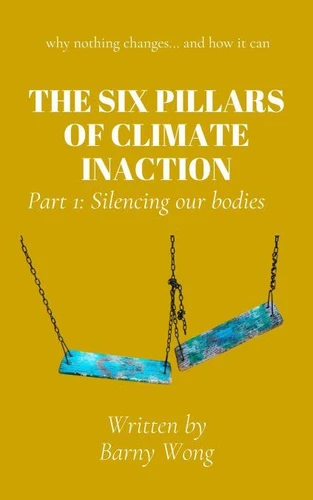
The Six Pillars of Climate Inaction: Silencing Our Bodies. Triadic Recovery Series, #1
Par :Formats :
Disponible dans votre compte client Decitre ou Furet du Nord dès validation de votre commande. Le format ePub est :
- Compatible avec une lecture sur My Vivlio (smartphone, tablette, ordinateur)
- Compatible avec une lecture sur liseuses Vivlio
- Pour les liseuses autres que Vivlio, vous devez utiliser le logiciel Adobe Digital Edition. Non compatible avec la lecture sur les liseuses Kindle, Remarkable et Sony
 , qui est-ce ?
Notre partenaire de plateforme de lecture numérique où vous retrouverez l'ensemble de vos ebooks gratuitement
Pour en savoir plus sur nos ebooks, consultez notre aide en ligne ici
C'est si simple ! Lisez votre ebook avec l'app Vivlio sur votre tablette, mobile ou ordinateur :

- FormatePub
- ISBN8232712150
- EAN9798232712150
- Date de parution29/11/2025
- Protection num.pas de protection
- Infos supplémentairesepub
- ÉditeurDraft2Digital
Résumé
We don't just avoid climate action-we're architected not to act. Across six piercing pillars, The Six Pillars of Climate Inaction exposes the hidden architecture that keeps modern life coherent while the planet unravels. What begins as reflection becomes method through the Rosetta Engine-a diagnostic framework that translates emotion, culture, and system design into one readable code. Part 1, Silencing our Bodies, walks readers through the subtle reflexes that make suppression feel like safety: how clarity is performed instead of embodied, how virtue becomes obedience, and how coherence replaces contact.
By the time the mirror becomes the engine, the reader is no longer a spectator-they are inside the machinery of their own avoidance. Wong writes with lyrical precision and systems-level insight born of two decades in engineering and a lifetime encountering symbolic choreography that renders humanity into winners and losers-how societies maintain innocence while enabling harm. Through this fusion of lived experience and structural analysis, he reveals why paralysis is not apathy but metabolism: a choreography of comfort masquerading as virtue.
This book offers no checklist, no hero, no villain-only the literacy required to see our defenses in motion and to interrupt them. Readers emerge fluent in their own architecture: able to sense when outdated coherence feels safer than truth and when belonging has been bought, stripping us of agency. The Six Pillars of Climate Inaction is not another climate diagnosis. It is an initiation into sight-a Rosetta Engine for reading the systems that keep us beautiful, coherent, and bound-only to confuse darkness for light.
By the time the mirror becomes the engine, the reader is no longer a spectator-they are inside the machinery of their own avoidance. Wong writes with lyrical precision and systems-level insight born of two decades in engineering and a lifetime encountering symbolic choreography that renders humanity into winners and losers-how societies maintain innocence while enabling harm. Through this fusion of lived experience and structural analysis, he reveals why paralysis is not apathy but metabolism: a choreography of comfort masquerading as virtue.
This book offers no checklist, no hero, no villain-only the literacy required to see our defenses in motion and to interrupt them. Readers emerge fluent in their own architecture: able to sense when outdated coherence feels safer than truth and when belonging has been bought, stripping us of agency. The Six Pillars of Climate Inaction is not another climate diagnosis. It is an initiation into sight-a Rosetta Engine for reading the systems that keep us beautiful, coherent, and bound-only to confuse darkness for light.