
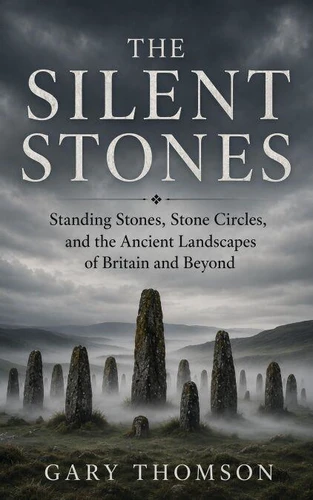
The Silent Stones
Par :Formats :
Disponible dans votre compte client Decitre ou Furet du Nord dès validation de votre commande. Le format ePub est :
- Compatible avec une lecture sur My Vivlio (smartphone, tablette, ordinateur)
- Compatible avec une lecture sur liseuses Vivlio
- Pour les liseuses autres que Vivlio, vous devez utiliser le logiciel Adobe Digital Edition. Non compatible avec la lecture sur les liseuses Kindle, Remarkable et Sony
 , qui est-ce ?
Notre partenaire de plateforme de lecture numérique où vous retrouverez l'ensemble de vos ebooks gratuitement
Pour en savoir plus sur nos ebooks, consultez notre aide en ligne ici
C'est si simple ! Lisez votre ebook avec l'app Vivlio sur votre tablette, mobile ou ordinateur :

- FormatePub
- ISBN8233893773
- EAN9798233893773
- Date de parution06/06/2026
- Protection num.pas de protection
- Infos supplémentairesepub
- ÉditeurLinda Balsamo
Résumé
Across Britain, Ireland, Brittany, and the wider Atlantic world, ancient stones still stand in fields, on moors, beside lochs, along ridges, and within landscapes shaped long before written history. Some rise alone from rough pasture. Others form circles, rows, avenues, and great ceremonial complexes whose original meanings remain partly hidden beneath centuries of weather, folklore, destruction, restoration, and debate.
The Silent Stones is a serious and atmospheric nonfiction study of standing stones, stone circles, and ancient ritual landscapes. Moving from the first stone monuments of the Neolithic world to the great sites of Stonehenge, Avebury, Calanais, Orkney, the Scottish Highlands, Wales, Cornwall, Ireland, and Brittany, Gary Thomson explores what these monuments reveal about memory, death, labour, community, land, sky, and belief.
This book does not reduce the stones to simple mystery or easy explanation. Instead, it separates archaeology from legend, evidence from speculation, and later folklore from prehistoric fact. It examines how stones were selected, moved, raised, altered, feared, protected, damaged, and reinterpreted across thousands of years. It looks at the dead buried near ancient monuments, the possible role of sun and moon alignments, the rise of Christian stories around pagan survivals, and the way modern heritage has reshaped how these places are seen today.
From the lonely menhir to the great stone circle, from the burial cairn to the windswept ceremonial landscape, The Silent Stones follows the long life of these monuments from their prehistoric origins to their place in modern imagination. What remains is not a single answer, but something more powerful: a record of human beings marking the land with stone, memory, and meaning. For readers interested in archaeology, British and Irish prehistory, folklore, sacred landscapes, ancient monuments, and the enduring mystery of the megalithic world, this book offers a grounded, thoughtful journey through some of the oldest surviving works of human intention.
The Silent Stones is a serious and atmospheric nonfiction study of standing stones, stone circles, and ancient ritual landscapes. Moving from the first stone monuments of the Neolithic world to the great sites of Stonehenge, Avebury, Calanais, Orkney, the Scottish Highlands, Wales, Cornwall, Ireland, and Brittany, Gary Thomson explores what these monuments reveal about memory, death, labour, community, land, sky, and belief.
This book does not reduce the stones to simple mystery or easy explanation. Instead, it separates archaeology from legend, evidence from speculation, and later folklore from prehistoric fact. It examines how stones were selected, moved, raised, altered, feared, protected, damaged, and reinterpreted across thousands of years. It looks at the dead buried near ancient monuments, the possible role of sun and moon alignments, the rise of Christian stories around pagan survivals, and the way modern heritage has reshaped how these places are seen today.
From the lonely menhir to the great stone circle, from the burial cairn to the windswept ceremonial landscape, The Silent Stones follows the long life of these monuments from their prehistoric origins to their place in modern imagination. What remains is not a single answer, but something more powerful: a record of human beings marking the land with stone, memory, and meaning. For readers interested in archaeology, British and Irish prehistory, folklore, sacred landscapes, ancient monuments, and the enduring mystery of the megalithic world, this book offers a grounded, thoughtful journey through some of the oldest surviving works of human intention.