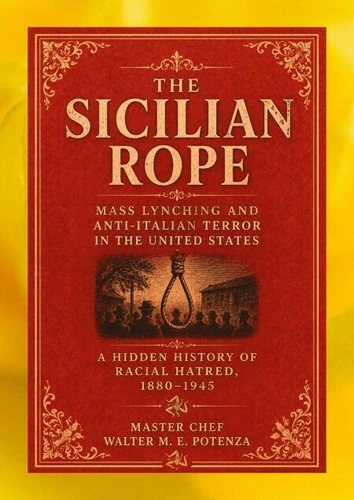
The Sicilian RopeMass Lynching and Anti-Italian Terror in the United StatesA Hidden History of Racial Hatred 1880-1945This book, The Sicilian Rope, explores the intricate history of Italian immigration to the United States during the late 19th and early 20th centuries, with a particular emphasis on Southern Italians and Sicilians. It analyzes the socio-economic factors that propelled this migration and underscores the rise of nativist sentiments that classified these immigrants as inferior based on pseudoscientific racial theories.
The narrative investigates how early stereotypes led to widespread job discrimination and exploitation through systems such as the padrone, which capitalized on the vulnerabilities of newcomers. The book further examines daily life within urban Italian communities, commonly known as "Little Italies, " where racism manifested in varied forms. It discusses how Southern Italians were situated within a flawed racial hierarchy that marginalized them not only in relation to Northern Europeans but also alongside African Americans in certain contexts.
This systemic exclusion was apparent in housing policies, educational segregation, and cultural animosity towards their Catholic faith. A significant portion of the work focuses on documenting instances of violence against Italians, including lynchings that occurred between the 1880s and 1910s. It highlights regional patterns where Italians encountered targeted aggression due to competition for labor or perceived criminality.
The infamous Sicilian lynchings in New Orleans in 1891 serve as a pivotal case for discussing mass violence against this community, demonstrating how mob actions were incited by media hysteria and resulted in international diplomatic tensions. Finally, the book addresses landmark cases such as the trial of Sacco and Vanzetti, which exemplified anti-immigrant sentiment during the Red Scare. Their conviction exposed deep-seated biases against Italian anarchists rooted more in prejudice than in factual evidence.
Overall, Blood on the Boot offers a critical examination of the historical injustices experienced by Italian immigrants while illuminating broader themes of race and identity in America. The book includes two (2) Bonus Chapters
The Sicilian RopeMass Lynching and Anti-Italian Terror in the United StatesA Hidden History of Racial Hatred 1880-1945This book, The Sicilian Rope, explores the intricate history of Italian immigration to the United States during the late 19th and early 20th centuries, with a particular emphasis on Southern Italians and Sicilians. It analyzes the socio-economic factors that propelled this migration and underscores the rise of nativist sentiments that classified these immigrants as inferior based on pseudoscientific racial theories.
The narrative investigates how early stereotypes led to widespread job discrimination and exploitation through systems such as the padrone, which capitalized on the vulnerabilities of newcomers. The book further examines daily life within urban Italian communities, commonly known as "Little Italies, " where racism manifested in varied forms. It discusses how Southern Italians were situated within a flawed racial hierarchy that marginalized them not only in relation to Northern Europeans but also alongside African Americans in certain contexts.
This systemic exclusion was apparent in housing policies, educational segregation, and cultural animosity towards their Catholic faith. A significant portion of the work focuses on documenting instances of violence against Italians, including lynchings that occurred between the 1880s and 1910s. It highlights regional patterns where Italians encountered targeted aggression due to competition for labor or perceived criminality.
The infamous Sicilian lynchings in New Orleans in 1891 serve as a pivotal case for discussing mass violence against this community, demonstrating how mob actions were incited by media hysteria and resulted in international diplomatic tensions. Finally, the book addresses landmark cases such as the trial of Sacco and Vanzetti, which exemplified anti-immigrant sentiment during the Red Scare. Their conviction exposed deep-seated biases against Italian anarchists rooted more in prejudice than in factual evidence.
Overall, Blood on the Boot offers a critical examination of the historical injustices experienced by Italian immigrants while illuminating broader themes of race and identity in America. The book includes two (2) Bonus Chapters


 , qui est-ce ?