SOLDES
Jusqu'à -70% sur une sélection d'articles*

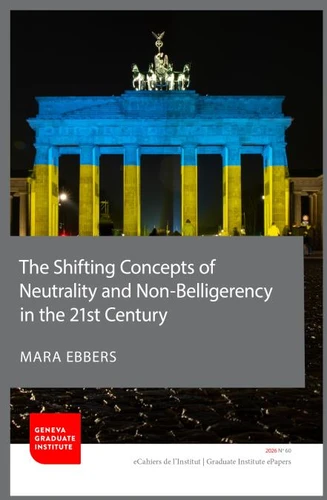
The Shifting Concepts of Neutrality and Non-Belligerency in the 21st Century. A Legal Analysis with Focus on the German and Austrian State Practice
Par :Formats :
Disponible dans votre compte client Decitre ou Furet du Nord dès validation de votre commande. Le format Multi-format est :
- Pour les liseuses autres que Vivlio, vous devez utiliser le logiciel Adobe Digital Edition. Non compatible avec la lecture sur les liseuses Kindle, Remarkable et Sony
 , qui est-ce ?
Notre partenaire de plateforme de lecture numérique où vous retrouverez l'ensemble de vos ebooks gratuitement
Pour en savoir plus sur nos ebooks, consultez notre aide en ligne ici
C'est si simple ! Lisez votre ebook avec l'app Vivlio sur votre tablette, mobile ou ordinateur :

- FormatMulti-format
- ISBN978-2-940600-64-9
- EAN9782940600649
- Date de parution16/03/2026
- Protection num.pas de protection
- Infos supplémentairesMulti-Format
- ÉditeurGraduate Institute Publications
Résumé
The applicability of neutrality law is a contested area of modern international law. Because it determines the options third states are facing in an international armed conflict, the Russo-Ukraine war lends it new urgency. This ePaper analyzes these options from a conceptual and practical perspective. It will, first, theoretically discuss the applicability of neutrality law, rejecting the theories of compulsorily applicable, qualified, and obsolete neutrality based on their conceptual flaws and inadequate incorporation of the emergence of a third option for third states.
It embraces optional neutrality based on the finding that it has always been optional. The second part examines the changing customary neutrality law and the related legal uncertainty for states. It finds that this uncertainty reproduces itself and is reflected in the German and Austrian debates and their opinio juris. To encounter this legal uncertainty, the third part details the options available for third states - neutrality, non-belligerency, co-belligerency, and their illegal counterparts.
We extend our heartfelt thanks to the Vahabzadeh Foundation for financially supporting the publication of best works by young researchers of the Graduate Institute, giving a priority to those who have been awarded academic prizes for their master's dissertations.
It embraces optional neutrality based on the finding that it has always been optional. The second part examines the changing customary neutrality law and the related legal uncertainty for states. It finds that this uncertainty reproduces itself and is reflected in the German and Austrian debates and their opinio juris. To encounter this legal uncertainty, the third part details the options available for third states - neutrality, non-belligerency, co-belligerency, and their illegal counterparts.
We extend our heartfelt thanks to the Vahabzadeh Foundation for financially supporting the publication of best works by young researchers of the Graduate Institute, giving a priority to those who have been awarded academic prizes for their master's dissertations.