
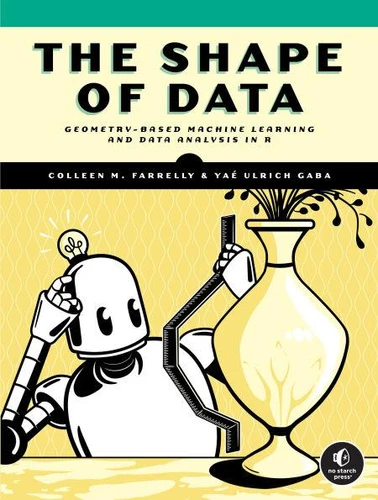
The Shape of Data. Geometry-Based Machine Learning and Data Analysis in R
Par : ,Formats :
Disponible dans votre compte client Decitre ou Furet du Nord dès validation de votre commande. Le format ePub est :
- Compatible avec une lecture sur My Vivlio (smartphone, tablette, ordinateur)
- Compatible avec une lecture sur liseuses Vivlio
- Pour les liseuses autres que Vivlio, vous devez utiliser le logiciel Adobe Digital Edition. Non compatible avec la lecture sur les liseuses Kindle, Remarkable et Sony
 , qui est-ce ?
Notre partenaire de plateforme de lecture numérique où vous retrouverez l'ensemble de vos ebooks gratuitement
Pour en savoir plus sur nos ebooks, consultez notre aide en ligne ici
C'est si simple ! Lisez votre ebook avec l'app Vivlio sur votre tablette, mobile ou ordinateur :

- Nombre de pages264
- FormatePub
- ISBN978-1-7185-0309-0
- EAN9781718503090
- Date de parution12/09/2023
- Protection num.pas de protection
- Taille8 Mo
- Infos supplémentairesepub
- ÉditeurNo Starch Press
Résumé
This advanced machine learning book highlights many algorithms from a geometric perspective and introduces tools in network science, metric geometry, and topological data analysis through practical application. Whether you're a mathematician, seasoned data scientist, or marketing professional, you'll find The Shape of Data to be the perfect introduction to the critical interplay between the geometry of data structures and machine learning.
This book's extensive collection of case studies (drawn from medicine, education, sociology, linguistics, and more) and gentle explanations of the math behind dozens of algorithms provide a comprehensive yet accessible look at how geometry shapes the algorithms that drive data analysis. In addition to gaining a deeper understanding of how to implement geometry-based algorithms with code, you'll explore: Supervised and unsupervised learning algorithms and their application to network data analysis The way distance metrics and dimensionality reduction impact machine learning How to visualize, embed, and analyze survey and text data with topology-based algorithms New approaches to computational solutions, including distributed computing and quantum algorithms
This book's extensive collection of case studies (drawn from medicine, education, sociology, linguistics, and more) and gentle explanations of the math behind dozens of algorithms provide a comprehensive yet accessible look at how geometry shapes the algorithms that drive data analysis. In addition to gaining a deeper understanding of how to implement geometry-based algorithms with code, you'll explore: Supervised and unsupervised learning algorithms and their application to network data analysis The way distance metrics and dimensionality reduction impact machine learning How to visualize, embed, and analyze survey and text data with topology-based algorithms New approaches to computational solutions, including distributed computing and quantum algorithms