SOLDES
Jusqu'à -70% sur une sélection d'articles*

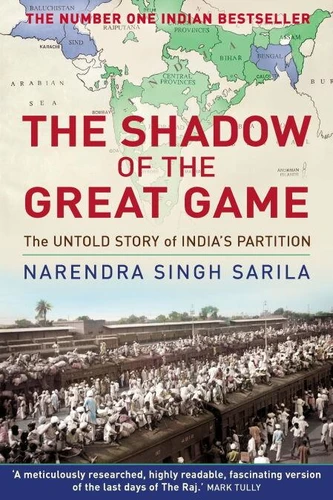
The Shadow of the Great Game. The Untold Story of India's Partition
Par :Formats :
Disponible dans votre compte client Decitre ou Furet du Nord dès validation de votre commande. Le format ePub protégé est :
- Compatible avec une lecture sur My Vivlio (smartphone, tablette, ordinateur)
- Compatible avec une lecture sur liseuses Vivlio
- Pour les liseuses autres que Vivlio, vous devez utiliser le logiciel Adobe Digital Edition. Non compatible avec la lecture sur les liseuses Kindle, Remarkable et Sony
- Non compatible avec un achat hors France métropolitaine
 , qui est-ce ?
Notre partenaire de plateforme de lecture numérique où vous retrouverez l'ensemble de vos ebooks gratuitement
Pour en savoir plus sur nos ebooks, consultez notre aide en ligne ici
C'est si simple ! Lisez votre ebook avec l'app Vivlio sur votre tablette, mobile ou ordinateur :

- Nombre de pages448
- FormatePub
- ISBN978-1-4721-2822-5
- EAN9781472128225
- Date de parution09/08/2017
- Protection num.Adobe DRM
- Infos supplémentairesepub
- ÉditeurConstable
Résumé
The untold story of India's Partition. The partition of India in 1947 was the only way to contain intractable religious differences as the subcontinent moved towards independence - or so the story goes. But this dramatic new history reveals previously overlooked links between British strategic interests - in the oil wells of the Middle East and maintaining access to its Indian Ocean territories - and partition.
Narendra Singh Sarela reveals here how hte Great Gane against the Soviet Union cast a long shadow. The top-secret documentary evidence unearthed by the author sheds new light on several prominent figures, including Gandhi, Jinnah, Mountbatten, Churchill, Attlee, Wavell and Nerhu. This radical reassessment of one of the key events in British colonial history is important in itself, but its claim that many of the roots of Islamic terrorism sweeping the world today lie in the partition of India has much wider implications.
Narendra Singh Sarela reveals here how hte Great Gane against the Soviet Union cast a long shadow. The top-secret documentary evidence unearthed by the author sheds new light on several prominent figures, including Gandhi, Jinnah, Mountbatten, Churchill, Attlee, Wavell and Nerhu. This radical reassessment of one of the key events in British colonial history is important in itself, but its claim that many of the roots of Islamic terrorism sweeping the world today lie in the partition of India has much wider implications.