
Israel Simelane is an Eswatini author and communication practitioner whose writing explores faith, leadership, human behaviour, social issues, biblical themes, and contemporary events. His works combine investigative thinking with accessible storytelling, often examining familiar subjects from unconventional perspectives. He writes both Christian and general nonfiction, with a strong emphasis on truth, responsibility, wisdom, and the consequences of human choices.
Nouveauté
The Seventh Millennium
Par :Formats :
Disponible dans votre compte client Decitre ou Furet du Nord dès validation de votre commande. Le format ePub est :
- Compatible avec une lecture sur My Vivlio (smartphone, tablette, ordinateur)
- Compatible avec une lecture sur liseuses Vivlio
- Pour les liseuses autres que Vivlio, vous devez utiliser le logiciel Adobe Digital Edition. Non compatible avec la lecture sur les liseuses Kindle, Remarkable et Sony
 , qui est-ce ?
Notre partenaire de plateforme de lecture numérique où vous retrouverez l'ensemble de vos ebooks gratuitement
Pour en savoir plus sur nos ebooks, consultez notre aide en ligne ici
C'est si simple ! Lisez votre ebook avec l'app Vivlio sur votre tablette, mobile ou ordinateur :

- FormatePub
- ISBN8235755420
- EAN9798235755420
- Date de parution28/08/2026
- Protection num.pas de protection
- Infos supplémentairesepub
- ÉditeurIoakim Ioakim
Résumé
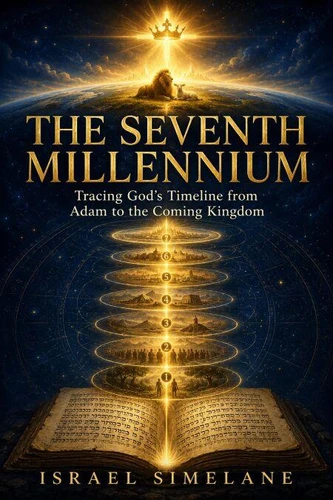
THE SEVENTH MILLENNIUMTracing God's Timeline from Adam to the Coming KingdomWhat if the seven days of creation reveal more than the beginning of the world? Could the six days of work followed by the seventh day of rest provide a pattern pointing toward the larger movement of human history?The Seventh Millennium is an investigative biblical journey through time-from Adam and the genealogies of Genesis to Israel, the coming of Jesus Christ, and the thousand-year reign revealed in Revelation.
Beginning with a simple question about the present Jewish year, Israel Simelane follows the chronological witnesses scattered throughout Scripture. The investigation examines patriarchal ages, generations, the Flood, Abraham, Israel's years in Egypt, the Exodus, the wilderness journey, judges and kings, the Temple, captivity and restoration, the genealogies of Matthew and Luke, and historical evidence surrounding the coming of Christ.
At the centre of the investigation is one remarkable biblical pattern: six periods of labour followed by a seventh associated with rest, release and restoration. Creation itself begins with six days of divine work followed by the seventh day of rest. Israel worked six days and rested on the seventh. The land was cultivated for six years and rested in the seventh. Hebrew servants moved toward release after six years of service.
Seven sabbatical cycles led toward Jubilee and its proclamation of liberty. Scripture also declares that a thousand years are as yesterday before God and that "one day is with the Lord as a thousand years, and a thousand years as one day." Could these biblical witnesses permit us to investigate a larger pattern-approximately six millenniums of human history followed by a seventh millennium characterized by divine rest?The book does not treat this possibility as a mathematical formula or claim to reveal the exact date of Christ's return.
Instead, it carefully distinguishes between what Scripture explicitly states, what can be calculated from biblical figures, what can be historically correlated, and what remains investigative interpretation. The journey also explores why the Jewish calendar provides an important living connection to biblical time while acknowledging that no human calendar should be treated as infallible. Ancient chronological differences, genealogical questions, overlapping reigns and competing historical reconstructions are examined without forcing the evidence to fit a predetermined conclusion.
Most importantly, this is not merely a book about dates. It is a book about Jesus Christ and the direction of history. Christ is not a late arrival in the biblical timeline. He is the eternal Word through whom all things were made, the Redeemer who entered the world He created, and the King toward whose righteous government history is moving. Hebrews declares that there remains a rest for the people of God.
Isaiah describes righteous government under the Branch from Jesse, when the earth will be filled with the knowledge of the Lord. Revelation reveals Satan bound and Christ reigning with His saints for one thousand years. Could this coming Kingdom be the great historical Sabbath toward which the biblical pattern has been pointing?The Seventh Millennium invites readers to open their Bibles, examine the evidence, follow the chronology and consider the question for themselves.
This is not an attempt to set dates. It is an invitation to recognise that time belongs to God, history remains under His authority, and creation is moving toward the appointed Kingdom of Jesus Christ.
Beginning with a simple question about the present Jewish year, Israel Simelane follows the chronological witnesses scattered throughout Scripture. The investigation examines patriarchal ages, generations, the Flood, Abraham, Israel's years in Egypt, the Exodus, the wilderness journey, judges and kings, the Temple, captivity and restoration, the genealogies of Matthew and Luke, and historical evidence surrounding the coming of Christ.
At the centre of the investigation is one remarkable biblical pattern: six periods of labour followed by a seventh associated with rest, release and restoration. Creation itself begins with six days of divine work followed by the seventh day of rest. Israel worked six days and rested on the seventh. The land was cultivated for six years and rested in the seventh. Hebrew servants moved toward release after six years of service.
Seven sabbatical cycles led toward Jubilee and its proclamation of liberty. Scripture also declares that a thousand years are as yesterday before God and that "one day is with the Lord as a thousand years, and a thousand years as one day." Could these biblical witnesses permit us to investigate a larger pattern-approximately six millenniums of human history followed by a seventh millennium characterized by divine rest?The book does not treat this possibility as a mathematical formula or claim to reveal the exact date of Christ's return.
Instead, it carefully distinguishes between what Scripture explicitly states, what can be calculated from biblical figures, what can be historically correlated, and what remains investigative interpretation. The journey also explores why the Jewish calendar provides an important living connection to biblical time while acknowledging that no human calendar should be treated as infallible. Ancient chronological differences, genealogical questions, overlapping reigns and competing historical reconstructions are examined without forcing the evidence to fit a predetermined conclusion.
Most importantly, this is not merely a book about dates. It is a book about Jesus Christ and the direction of history. Christ is not a late arrival in the biblical timeline. He is the eternal Word through whom all things were made, the Redeemer who entered the world He created, and the King toward whose righteous government history is moving. Hebrews declares that there remains a rest for the people of God.
Isaiah describes righteous government under the Branch from Jesse, when the earth will be filled with the knowledge of the Lord. Revelation reveals Satan bound and Christ reigning with His saints for one thousand years. Could this coming Kingdom be the great historical Sabbath toward which the biblical pattern has been pointing?The Seventh Millennium invites readers to open their Bibles, examine the evidence, follow the chronology and consider the question for themselves.
This is not an attempt to set dates. It is an invitation to recognise that time belongs to God, history remains under His authority, and creation is moving toward the appointed Kingdom of Jesus Christ.
A propos de Israel Simelane

0,99 €
0,99 €
The Helper's Reward
E-book
1,99 €
The Father's Heart
E-book
0,99 €
3,49 €
3,49 €
4,49 €
3,49 €
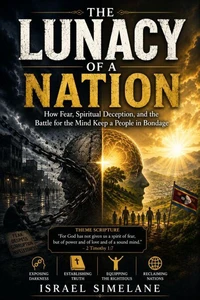
The Lunacy of a Nation
E-book
2,99 €
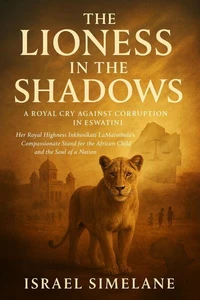
3,49 €
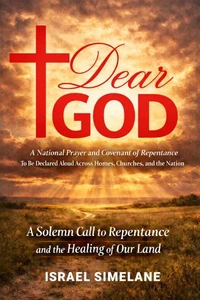
Dear GOD
E-book
1,99 €
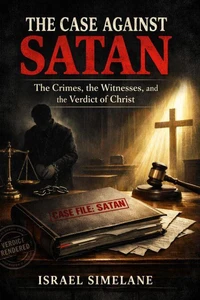
The Case Against Satan
E-book
2,99 €
2,99 €

4,49 €
4,49 €
Paul the Strategist
E-book
4,49 €
5,49 €
2,99 €

Paper Tigers
E-book
3,49 €