SOLDES
Jusqu'à -70% sur une sélection d'articles*

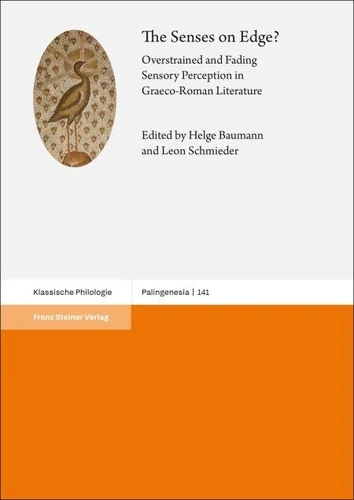
The Senses on Edge?. Overstrained and Fading Sensory Perception in Graeco-Roman Literature
Par : ,Formats :
Disponible dans votre compte client Decitre ou Furet du Nord dès validation de votre commande. Le format PDF est :
- Compatible avec une lecture sur My Vivlio (smartphone, tablette, ordinateur)
- Compatible avec une lecture sur liseuses Vivlio
- Pour les liseuses autres que Vivlio, vous devez utiliser le logiciel Adobe Digital Edition. Non compatible avec la lecture sur les liseuses Kindle, Remarkable et Sony
 , qui est-ce ?
Notre partenaire de plateforme de lecture numérique où vous retrouverez l'ensemble de vos ebooks gratuitement
Pour en savoir plus sur nos ebooks, consultez notre aide en ligne ici
C'est si simple ! Lisez votre ebook avec l'app Vivlio sur votre tablette, mobile ou ordinateur :

- Nombre de pages272
- FormatPDF
- ISBN978-3-515-13852-9
- EAN9783515138529
- Date de parution28/03/2025
- Protection num.Digital Watermarking
- Taille2 Mo
- Infos supplémentairespdf
- ÉditeurFranz Steiner
Résumé
Ancient literature abounds with portrayals of and reflections on sensory experience, yet there has been no systematic study of its more extreme and marginal phenomena, be it a loss of the senses or their overstimulation. This volume on Graeco-Roman perceptions of sensory experience therefore investigates the aspect of the extreme from multiple angles, encompassing philosophical, social, and literary perspectives.
The contributions analyse texts spanning from the Greek Classical period to Roman Late Antiquity and from epigram to epic. They investigate both textual strategies of evoking sensory experiences that were considered extreme by certain agents or groups and the discourses that evolved around them in their socio-cultural context. The volume thereby adds to the flourishing field of sensory studies within Classics by mapping out the sensory extreme and exploring its interrelation with affect and emotion.
The contributions analyse texts spanning from the Greek Classical period to Roman Late Antiquity and from epigram to epic. They investigate both textual strategies of evoking sensory experiences that were considered extreme by certain agents or groups and the discourses that evolved around them in their socio-cultural context. The volume thereby adds to the flourishing field of sensory studies within Classics by mapping out the sensory extreme and exploring its interrelation with affect and emotion.