SOLDES
Jusqu'à -70% sur une sélection d'articles*

Nouveauté
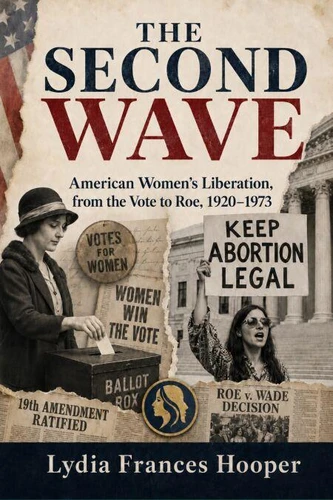
THE SECOND WAVE. American Women's Liberation, from the Vote to Roe, 1920-1973
Par :Formats :
Disponible dans votre compte client Decitre ou Furet du Nord dès validation de votre commande. Le format ePub est :
- Compatible avec une lecture sur My Vivlio (smartphone, tablette, ordinateur)
- Compatible avec une lecture sur liseuses Vivlio
- Pour les liseuses autres que Vivlio, vous devez utiliser le logiciel Adobe Digital Edition. Non compatible avec la lecture sur les liseuses Kindle, Remarkable et Sony
 , qui est-ce ?
Notre partenaire de plateforme de lecture numérique où vous retrouverez l'ensemble de vos ebooks gratuitement
Pour en savoir plus sur nos ebooks, consultez notre aide en ligne ici
C'est si simple ! Lisez votre ebook avec l'app Vivlio sur votre tablette, mobile ou ordinateur :

- FormatePub
- ISBN8905165238
- EAN9798905165238
- Date de parution01/06/2026
- Protection num.pas de protection
- Taille952 Ko
- Infos supplémentairesepub
- ÉditeurChiify
Résumé
The complete narrative history of women's liberation, 1920-1973 - from the Nineteenth Amendment to Roe v. Wade, Betty Friedan's Feminine Mystique, Title VII, the ERA, and the second wave of American feminism.
In 1957, Betty Friedan mailed a questionnaire to her fellow Smith College graduates, class of 1942. What she found - and published six years later as The Feminine Mystique - was a pervasive, unarticulated dissatisfaction among educated women following the prescribed path of marriage and motherhood.
She called it "the problem that has no name." The book sold three million copies in its first three years and sent a generation of women looking for the remedies. This is the history of how they found them - and what they built and failed to build in the process. Lydia Frances Hooper traces the full arc of American women's liberation from the Nineteenth Amendment's 1920 ratification through Roe v.
Wade in 1973: the legal framework of coverture that the vote did not touch, the New Deal's Frances Perkins and Eleanor Roosevelt opening federal power to women while building a Social Security system that treated wives as dependents, the wartime Rosie the Riveter breakthrough and its postwar reversal, and the 1960s explosion - Title VII of the Civil Rights Act, NOW, consciousness-raising, the Miss America protest of 1968, the birth control pill, Griswold v.
Connecticut, and the ERA's 84-8 Senate passage - that transformed law, medicine, and education within a decade. Inside this women's liberation history: The problem with no name - Friedan's Smith College questionnaire, the three million copies, and what the book concealed about its author's own labor-journalist past (Chapter 5) Title VII and the EEOC - how sex discrimination was added to the Civil Rights Act of 1964 and how the EEOC's initial refusal to enforce it produced NOW (Chapter 10) The birth control pill - six million users by 1965, ten million by 1970; Barbara Seaman's 1969 exposure of the cardiovascular risks manufacturers had hidden; the congressional hearings where feminists demanded women be heard on a drug only women used (Chapter 17) Phyllis Schlafly's STOP ERA - how one conservative organizer, founding her campaign in October 1972, held the ERA at 35 of the required 38 states and killed it by 1982 (Chapter 22) Our Bodies, Ourselves - the twelve Boston women who met at a 1969 conference and compiled the book that sold millions and changed women's relationship to medical authority (Chapter 18) Roe v.
Wade - the 1973 decision, its Griswold v. Connecticut foundation, and the lasting controversy the ruling produced (Chapter 20) The second wave was not unified - it split over the ERA, over pornography, over race and class, over whether women needed equal treatment or different treatment. Those disagreements were productive: they forced harder thinking about what equality meant. Within a decade, women changed the law, changed medicine, changed education, and changed the language.
The changes were incomplete, as all revolutions are, and they provoked a counterreaction that shaped American politics for the next half century. Both are still unfolding. For readers of Ruth Rosen's THE WORLD SPLIT OPEN and Gail Collins's WHEN EVERYTHING CHANGED.
She called it "the problem that has no name." The book sold three million copies in its first three years and sent a generation of women looking for the remedies. This is the history of how they found them - and what they built and failed to build in the process. Lydia Frances Hooper traces the full arc of American women's liberation from the Nineteenth Amendment's 1920 ratification through Roe v.
Wade in 1973: the legal framework of coverture that the vote did not touch, the New Deal's Frances Perkins and Eleanor Roosevelt opening federal power to women while building a Social Security system that treated wives as dependents, the wartime Rosie the Riveter breakthrough and its postwar reversal, and the 1960s explosion - Title VII of the Civil Rights Act, NOW, consciousness-raising, the Miss America protest of 1968, the birth control pill, Griswold v.
Connecticut, and the ERA's 84-8 Senate passage - that transformed law, medicine, and education within a decade. Inside this women's liberation history: The problem with no name - Friedan's Smith College questionnaire, the three million copies, and what the book concealed about its author's own labor-journalist past (Chapter 5) Title VII and the EEOC - how sex discrimination was added to the Civil Rights Act of 1964 and how the EEOC's initial refusal to enforce it produced NOW (Chapter 10) The birth control pill - six million users by 1965, ten million by 1970; Barbara Seaman's 1969 exposure of the cardiovascular risks manufacturers had hidden; the congressional hearings where feminists demanded women be heard on a drug only women used (Chapter 17) Phyllis Schlafly's STOP ERA - how one conservative organizer, founding her campaign in October 1972, held the ERA at 35 of the required 38 states and killed it by 1982 (Chapter 22) Our Bodies, Ourselves - the twelve Boston women who met at a 1969 conference and compiled the book that sold millions and changed women's relationship to medical authority (Chapter 18) Roe v.
Wade - the 1973 decision, its Griswold v. Connecticut foundation, and the lasting controversy the ruling produced (Chapter 20) The second wave was not unified - it split over the ERA, over pornography, over race and class, over whether women needed equal treatment or different treatment. Those disagreements were productive: they forced harder thinking about what equality meant. Within a decade, women changed the law, changed medicine, changed education, and changed the language.
The changes were incomplete, as all revolutions are, and they provoked a counterreaction that shaped American politics for the next half century. Both are still unfolding. For readers of Ruth Rosen's THE WORLD SPLIT OPEN and Gail Collins's WHEN EVERYTHING CHANGED.