In the United States, the rules of the political game are engines of inevitability. Duverger's Law predicted that winner-take-all, single-member districts would produce only two dominant parties. By 1967, it became a reality with the Uniform Congressional District Act. Primaries reward zealots, general elections reward centrists, and a feedback loop of extremes ensures polarization. Redistricting and court rulings eliminated third-party strongholds, fortifying the two-party duopoly.
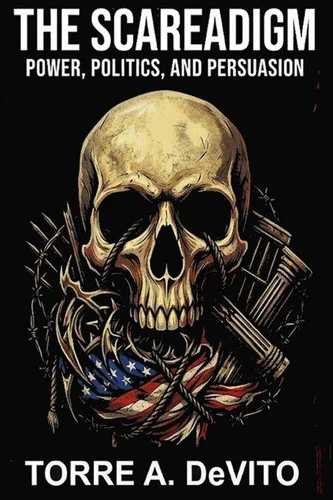
The Scareadigm is a monumental struggle between good and evil. It doesn't matter which side of the aisle we're on. Evil is always "them, " and good is always "us." For us, the ends justify the means. For them, perceived evil intentions obscure any possible benefit of their actions. Fear becomes a tool, compromise collapses, and the machinery of polarization spins at full speed. Welcome to the Scareadigm.
In the United States, the rules of the political game are engines of inevitability. Duverger's Law predicted that winner-take-all, single-member districts would produce only two dominant parties. By 1967, it became a reality with the Uniform Congressional District Act. Primaries reward zealots, general elections reward centrists, and a feedback loop of extremes ensures polarization. Redistricting and court rulings eliminated third-party strongholds, fortifying the two-party duopoly.
The Scareadigm is a monumental struggle between good and evil. It doesn't matter which side of the aisle we're on. Evil is always "them, " and good is always "us." For us, the ends justify the means. For them, perceived evil intentions obscure any possible benefit of their actions. Fear becomes a tool, compromise collapses, and the machinery of polarization spins at full speed. Welcome to the Scareadigm.


 , qui est-ce ?
