From 1997 Peter Conradi was Professor Emeritus, Kingston University, and Honorary Research Fellow at UCL; from 1999 he has been Visiting Research Fellow at Magdalen, Oxford. His critical study, 'IRIS MURDOCH: THE SAINT AND THE ARTIST' (Macmillan, 1986), was described by the NYTBR as 'Brilliant' and will be reissued by HarperCollins.
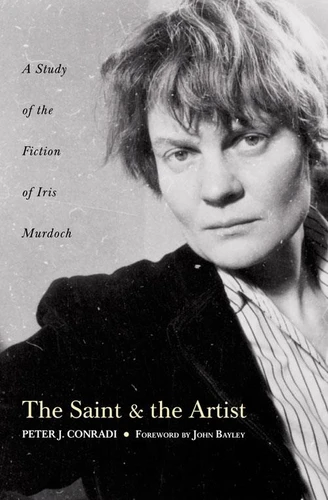
The Saint and Artist. A Study of the Fiction of Iris Murdoch
Par :Formats :
Disponible dans votre compte client Decitre ou Furet du Nord dès validation de votre commande. Le format ePub protégé est :
- Compatible avec une lecture sur My Vivlio (smartphone, tablette, ordinateur)
- Compatible avec une lecture sur liseuses Vivlio
- Pour les liseuses autres que Vivlio, vous devez utiliser le logiciel Adobe Digital Edition. Non compatible avec la lecture sur les liseuses Kindle, Remarkable et Sony
- Non compatible avec un achat hors France métropolitaine
 , qui est-ce ?
Notre partenaire de plateforme de lecture numérique où vous retrouverez l'ensemble de vos ebooks gratuitement
Pour en savoir plus sur nos ebooks, consultez notre aide en ligne ici
C'est si simple ! Lisez votre ebook avec l'app Vivlio sur votre tablette, mobile ou ordinateur :

- Nombre de pages352
- FormatePub
- ISBN978-0-00-738898-1
- EAN9780007388981
- Date de parution14/04/2011
- Protection num.Adobe DRM
- Infos supplémentairesepub
- ÉditeurHarperCollins
Résumé
Published to coincide with his major biography of Iris Murdoch, Peter Conradi's acclaimed critical appreciation of her work is reissued in a fully revised and updated edition, with a foreword by John Bayley.
'Peter Conradi is uniquely qualified to accompany the reader in a discovery of one of the 20th-century's most remarkable novelists and thinkers.' John Bayley
Iris Murdoch, who died in 1999, was the author of twenty-six novels, including 'The Bell', 'A Fairly Honourable Defeat', 'The Black Prince' and the Booker Prize-winning 'The Sea, The Sea'.
In 'The Saint and the Artist', the only full critical examination of Murdoch's work by a British critic, Peter Conradi, who knew her well, traces the way in which the zest and buoyant high spirits of her early novels gave way to a more deeply and darkly comic achievement in the novels of the 1970s, and in some from the last period.
He suggests how her own life, wonderfully transmuted into high art, provided the raw material for her novels, and argues that they should be read as serious entertainments and as important fictions in the Anglo-Russian tradition, and not as disguised philosophy.
He suggests how her own life, wonderfully transmuted into high art, provided the raw material for her novels, and argues that they should be read as serious entertainments and as important fictions in the Anglo-Russian tradition, and not as disguised philosophy.