SOLDES
Jusqu'à -70% sur une sélection d'articles*

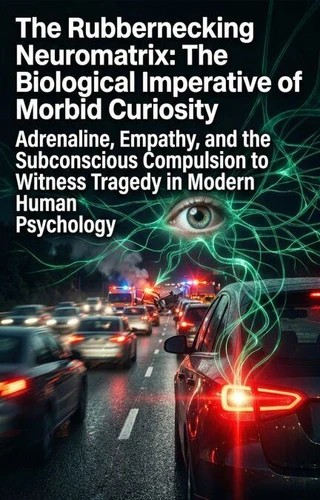
The Rubbernecking Neuromatrix: The Biological Imperative of Morbid Curiosity. Adrenaline, Empathy, and the Subconscious Compulsion to Witness Tragedy in Modern Human Psychology
Par :Formats :
Disponible dans votre compte client Decitre ou Furet du Nord dès validation de votre commande. Le format ePub est :
- Compatible avec une lecture sur My Vivlio (smartphone, tablette, ordinateur)
- Compatible avec une lecture sur liseuses Vivlio
- Pour les liseuses autres que Vivlio, vous devez utiliser le logiciel Adobe Digital Edition. Non compatible avec la lecture sur les liseuses Kindle, Remarkable et Sony
 , qui est-ce ?
Notre partenaire de plateforme de lecture numérique où vous retrouverez l'ensemble de vos ebooks gratuitement
Pour en savoir plus sur nos ebooks, consultez notre aide en ligne ici
C'est si simple ! Lisez votre ebook avec l'app Vivlio sur votre tablette, mobile ou ordinateur :

- Nombre de pages163
- FormatePub
- ISBN978-3-565-38200-2
- EAN9783565382002
- Date de parution03/04/2026
- Protection num.pas de protection
- Taille782 Ko
- Infos supplémentairesepub
- ÉditeurEmphaloz Publishing House
Résumé
When traffic grinds to a halt on a highway, it is rarely due to blocked lanes; it is caused by the unavoidable human urge to slow down and stare at a horrific car crash. Society shames this behavior as "rubbernecking" or morbid curiosity, dismissing it as a cruel lack of empathy. In reality, it is a hardwired, highly specialized evolutionary survival mechanism.
This book explores the neurological architecture of our macabre fascinations.
When the brain detects a catastrophic event, the amygdala overrides social politeness, forcing the optic nerve to lock onto the carnage. The brain is frantically downloading environmental data to learn how the disaster occurred so it can update its own internal threat-avoidance algorithms. We dissect how modern media and true crime podcasts hijack this exact survival loop, commodifying our biological need to study the destruction of others. Discover the dark side of your own attention span.
Learn why looking away from a disaster is a biological impossibility.
When the brain detects a catastrophic event, the amygdala overrides social politeness, forcing the optic nerve to lock onto the carnage. The brain is frantically downloading environmental data to learn how the disaster occurred so it can update its own internal threat-avoidance algorithms. We dissect how modern media and true crime podcasts hijack this exact survival loop, commodifying our biological need to study the destruction of others. Discover the dark side of your own attention span.
Learn why looking away from a disaster is a biological impossibility.