SOLDES
Jusqu'à -70% sur une sélection d'articles*

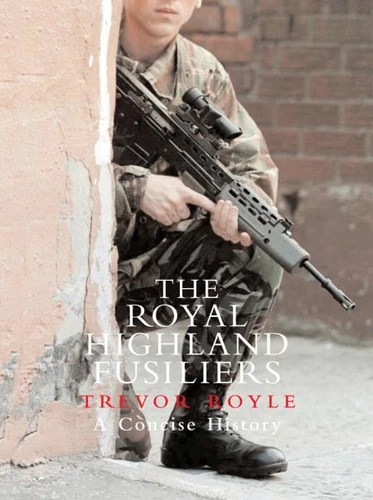
The Royal Highland Fusiliers. A Concise History
Par :Formats :
Disponible dans votre compte client Decitre ou Furet du Nord dès validation de votre commande. Le format ePub protégé est :
- Compatible avec une lecture sur My Vivlio (smartphone, tablette, ordinateur)
- Compatible avec une lecture sur liseuses Vivlio
- Pour les liseuses autres que Vivlio, vous devez utiliser le logiciel Adobe Digital Edition. Non compatible avec la lecture sur les liseuses Kindle, Remarkable et Sony
- Non compatible avec un achat hors France métropolitaine
 , qui est-ce ?
Notre partenaire de plateforme de lecture numérique où vous retrouverez l'ensemble de vos ebooks gratuitement
Pour en savoir plus sur nos ebooks, consultez notre aide en ligne ici
C'est si simple ! Lisez votre ebook avec l'app Vivlio sur votre tablette, mobile ou ordinateur :

- Nombre de pages240
- FormatePub
- ISBN978-1-78057-252-9
- EAN9781780572529
- Date de parution15/07/2011
- Protection num.Adobe DRM
- Infos supplémentairesepub
- ÉditeurMainstream Digital
Résumé
The Royal Highland Fusiliers came into being in 1959 as a result of the amalgamation of two regiments, both of which had strong connections with Glasgow and the west of Scotland: The Royal Scots Fusiliers, founded in 1678 by Charles Erskine, fifth Earl of Mar; and The Highland Light Infantry, or HLI, created in 1881 as a result of the amalgamation of the 71st Highlanders and the 74th Highlanders. Two distinctive infantry traditions can be found in the names of these regiments, which have helped to form the line infantry regiments of the British Army.
Fusiliers were armed with the flintlock fusil instead of the more common matchlock musket, and light infantry came into being during the Napoleonic Wars to provide the army with a corps of skirmishing sharpshooters similar to Austrian and German Jäger troops. Amongst those who have served as fusiliers or light infantrymen are Hugh Trenchard, who became Air Chief Marshal of the Royal Air Force, Winston Churchill and David Niven, who joined the HLI from Sandhurst in the inter-war years.
All these traditions and personalities went into the making of a regiment whose name lives on in the 2nd battalion of The Royal Regiment of Scotland, which was formed in 2006 as a result of the restructuring of the infantry regiments of the British Army.
Fusiliers were armed with the flintlock fusil instead of the more common matchlock musket, and light infantry came into being during the Napoleonic Wars to provide the army with a corps of skirmishing sharpshooters similar to Austrian and German Jäger troops. Amongst those who have served as fusiliers or light infantrymen are Hugh Trenchard, who became Air Chief Marshal of the Royal Air Force, Winston Churchill and David Niven, who joined the HLI from Sandhurst in the inter-war years.
All these traditions and personalities went into the making of a regiment whose name lives on in the 2nd battalion of The Royal Regiment of Scotland, which was formed in 2006 as a result of the restructuring of the infantry regiments of the British Army.
A propos de Trevor Royle
14,99 €
10,99 €
10,99 €
10,99 €
10,99 €
10,99 €
14,99 €