
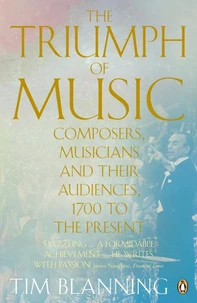
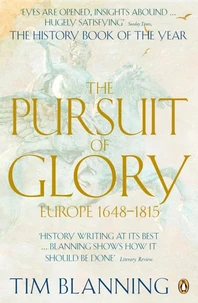
Tim Blanning is Professor of Modern European History at the University of Cambridge and a Fellow of Sidney Sussex College, Cambridge. He is also a Fellow of the British Academy. He has been described by THE SUNDAY TIMES as 'a long-time Cambridge academic who can make even the most arcane subject thrum with interest'. He lives in Cambridge.
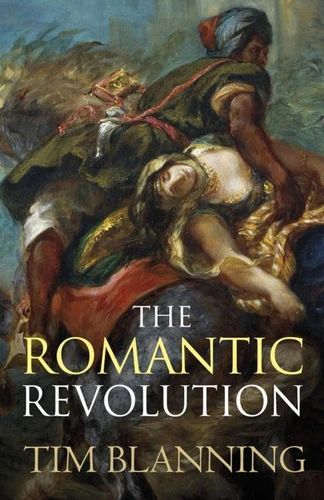
The Romantic Revolution
Par :Formats :
Disponible dans votre compte client Decitre ou Furet du Nord dès validation de votre commande. Le format ePub protégé est :
- Compatible avec une lecture sur My Vivlio (smartphone, tablette, ordinateur)
- Compatible avec une lecture sur liseuses Vivlio
- Pour les liseuses autres que Vivlio, vous devez utiliser le logiciel Adobe Digital Edition. Non compatible avec la lecture sur les liseuses Kindle, Remarkable et Sony
- Non compatible avec un achat hors France métropolitaine
 , qui est-ce ?
Notre partenaire de plateforme de lecture numérique où vous retrouverez l'ensemble de vos ebooks gratuitement
Pour en savoir plus sur nos ebooks, consultez notre aide en ligne ici
C'est si simple ! Lisez votre ebook avec l'app Vivlio sur votre tablette, mobile ou ordinateur :

- Nombre de pages256
- FormatePub
- ISBN978-1-78022-567-8
- EAN9781780225678
- Date de parution19/12/2012
- Protection num.Adobe DRM
- Infos supplémentairesepub
- ÉditeurWeidenfeld & Nicolson
Résumé
A compelling and persuasive account of how the Romantic Movement permanently changed the way we see things and express ourselves. Three great revolutions rocked the world around 1800. The first two - the French Revolution and the Industrial Revolution - have inspired the greatest volume of literature. But the third - the romantic revolution - was perhaps the most fundamental and far-reaching. From Byron, Wordsworth, Coleridge and Burns, to Beethoven, Wagner, Berlioz, Rossini and Liszt, to Goya, Turner, Delacroix and Blake, the romantics brought about nothing less than a revolution when they tore up the artistic rule book of the old regime.
This was the period in which art acquired its modern meaning; for the first time the creator, rather than the created, took centre-stage. Artists became the high priests of a new religion, and as the concert hall and gallery came to take the place of the church, the public found a new subject worthy of veneration in paintings, poetry and music. Tim Blanning's sparkling, wide-ranging survey traces the roots and evolution of a cultural revolution whose reverberations continue to be felt today.
This was the period in which art acquired its modern meaning; for the first time the creator, rather than the created, took centre-stage. Artists became the high priests of a new religion, and as the concert hall and gallery came to take the place of the church, the public found a new subject worthy of veneration in paintings, poetry and music. Tim Blanning's sparkling, wide-ranging survey traces the roots and evolution of a cultural revolution whose reverberations continue to be felt today.
A propos de Tim Blanning
4,99 €
10,99 €
14,99 €