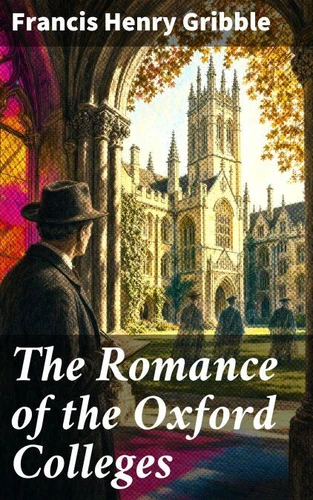
In The Romance of the Oxford Colleges, Francis Henry Gribble offers a graceful historical-literary portrait of Oxford's collegiate world, weaving together anecdote, architectural description, institutional history, and the inherited legends that give the university its peculiar enchantment. The book belongs to the late Victorian and Edwardian tradition of cultivated popular scholarship, in which erudition is tempered by narrative charm.
Gribble attends not only to the formal foundations and endowments of the colleges, but also to the personalities, customs, and episodes that transformed them into living symbols of English intellectual and social continuity. Gribble was a prolific man of letters, journalist, biographer, and cultural commentator whose work frequently mediated between historical research and the educated general reader.
His interest in Oxford was well suited to his broader literary vocation: to recover the human drama behind institutions often regarded as austere or remote. Writing in an age deeply invested in national heritage, he brought to the subject both antiquarian curiosity and a stylist's appreciation for atmosphere, character, and historical romance. This is a rewarding book for readers interested in Oxford, educational history, and the mythology of English culture.
It will especially appeal to those who value historical writing that informs without pedantry and evokes place with elegance, sympathy, and literary intelligence.
In The Romance of the Oxford Colleges, Francis Henry Gribble offers a graceful historical-literary portrait of Oxford's collegiate world, weaving together anecdote, architectural description, institutional history, and the inherited legends that give the university its peculiar enchantment. The book belongs to the late Victorian and Edwardian tradition of cultivated popular scholarship, in which erudition is tempered by narrative charm.
Gribble attends not only to the formal foundations and endowments of the colleges, but also to the personalities, customs, and episodes that transformed them into living symbols of English intellectual and social continuity. Gribble was a prolific man of letters, journalist, biographer, and cultural commentator whose work frequently mediated between historical research and the educated general reader.
His interest in Oxford was well suited to his broader literary vocation: to recover the human drama behind institutions often regarded as austere or remote. Writing in an age deeply invested in national heritage, he brought to the subject both antiquarian curiosity and a stylist's appreciation for atmosphere, character, and historical romance. This is a rewarding book for readers interested in Oxford, educational history, and the mythology of English culture.
It will especially appeal to those who value historical writing that informs without pedantry and evokes place with elegance, sympathy, and literary intelligence.

 , qui est-ce ?