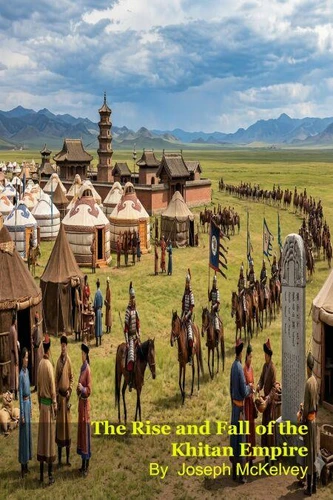
The Rise and Fall of the Khitan EmpireFor two centuries, the Khitan people ruled one of the most sophisticated empires in medieval East Asia - yet their story remains one of history's most overlooked chapters. Rising from obscurity in the northeastern steppe after the collapse of the Tang dynasty, the Khitan under the visionary Yelü Abaoji founded the Liao dynasty in 916 CE and built an institutional masterpiece: the Dual Administration System, which governed nomadic and sedentary populations simultaneously without forcing either to abandon its identity.
Their empire produced remarkable Buddhist monuments, two independent writing systems, a distinctive artistic tradition, and some of the most powerful women in pre-modern Asian history. When the Jurchen Jin destroyed the Liao in 1125 CE, the Khitan did not simply vanish. A remnant people followed Yelü Dashi westward across the steppe to found the Qara Khitai in Central Asia - a second empire that became the medieval world's most religiously tolerant state and whose defeat of the Seljuk Sultanate echoed all the way to Crusader Europe as the legend of Prester John.
Their name became "Cathay, " the western world's word for China. Their descendants, the Daur people of Northeast China, carry their genetic and cultural legacy to this day. This is the full story of the Khitan - empire builders, institutional pioneers, and the people who named a world.
The Rise and Fall of the Khitan EmpireFor two centuries, the Khitan people ruled one of the most sophisticated empires in medieval East Asia - yet their story remains one of history's most overlooked chapters. Rising from obscurity in the northeastern steppe after the collapse of the Tang dynasty, the Khitan under the visionary Yelü Abaoji founded the Liao dynasty in 916 CE and built an institutional masterpiece: the Dual Administration System, which governed nomadic and sedentary populations simultaneously without forcing either to abandon its identity.
Their empire produced remarkable Buddhist monuments, two independent writing systems, a distinctive artistic tradition, and some of the most powerful women in pre-modern Asian history. When the Jurchen Jin destroyed the Liao in 1125 CE, the Khitan did not simply vanish. A remnant people followed Yelü Dashi westward across the steppe to found the Qara Khitai in Central Asia - a second empire that became the medieval world's most religiously tolerant state and whose defeat of the Seljuk Sultanate echoed all the way to Crusader Europe as the legend of Prester John.
Their name became "Cathay, " the western world's word for China. Their descendants, the Daur people of Northeast China, carry their genetic and cultural legacy to this day. This is the full story of the Khitan - empire builders, institutional pioneers, and the people who named a world.

 , qui est-ce ?
