SOLDES
Jusqu'à -70% sur une sélection d'articles*

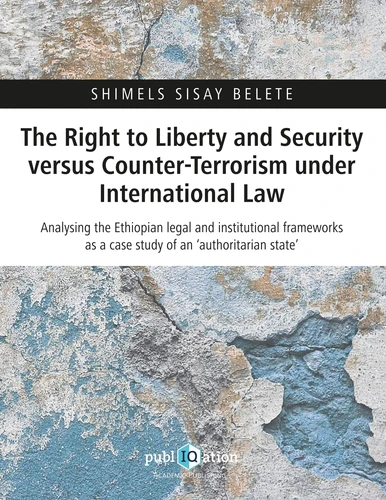
The Right to Liberty and Security versus Counter-Terrorism under International Law. Analysing the Ethiopian legal and institutional frameworks as a case study of an ‘authoritarian state’
Par :Formats :
Disponible dans votre compte client Decitre ou Furet du Nord dès validation de votre commande. Le format ePub est :
- Compatible avec une lecture sur My Vivlio (smartphone, tablette, ordinateur)
- Compatible avec une lecture sur liseuses Vivlio
- Pour les liseuses autres que Vivlio, vous devez utiliser le logiciel Adobe Digital Edition. Non compatible avec la lecture sur les liseuses Kindle, Remarkable et Sony
 , qui est-ce ?
Notre partenaire de plateforme de lecture numérique où vous retrouverez l'ensemble de vos ebooks gratuitement
Pour en savoir plus sur nos ebooks, consultez notre aide en ligne ici
C'est si simple ! Lisez votre ebook avec l'app Vivlio sur votre tablette, mobile ou ordinateur :

- Nombre de pages504
- FormatePub
- ISBN978-3-7458-6998-9
- EAN9783745869989
- Date de parution14/11/2018
- Protection num.Digital Watermarking
- Taille935 Ko
- Infos supplémentairesepub
- ÉditeurPubliQation
Résumé
Particularly in the aftermath of the 9/11 terrorist attack, the threat of terrorism, however, defined, has been invoked as a common 'justification' in the pursuit of remodelling policies, laws, and institutions, both at the international and in the domestic politico-legal showground. The broader central theme that this book explores is the normative vibe under which the present-day counterterrorism discourse is construed and sculpted in the legislative and institutional structures of an authoritarian state where the political power and government institutions are functioning under a single-party-monopolised system.
Presenting the Ethiopian legislative and institutional frameworks as a case study, the book critically reflects on the extent that the international legal and/or institutional counterterrorism response is sensitised in a manner lessening the risk of conflating authoritarian regime's unbearable reactions to citizens' legitimate demands and resistances against its repression vis-àvis that of its response to the common threat of international terrorism.
In particular, the book ponders whether or not the range of the substantive and procedural aspects of the Ethiopian antiterrorism legislative and institutional frameworks are wrought to fit into the main objectives and standards that emanate from the pertinent international laws relating to terrorism and the international human rights law as well as the domestic constitutional law maxims.
Presenting the Ethiopian legislative and institutional frameworks as a case study, the book critically reflects on the extent that the international legal and/or institutional counterterrorism response is sensitised in a manner lessening the risk of conflating authoritarian regime's unbearable reactions to citizens' legitimate demands and resistances against its repression vis-àvis that of its response to the common threat of international terrorism.
In particular, the book ponders whether or not the range of the substantive and procedural aspects of the Ethiopian antiterrorism legislative and institutional frameworks are wrought to fit into the main objectives and standards that emanate from the pertinent international laws relating to terrorism and the international human rights law as well as the domestic constitutional law maxims.