Signe Geller spent her life in pursuit of the perfect split-second, a machine of muscle and grit until her own heart betrayed her. Bram de Graaf was a man of glass and steel, an architect who believed he could design a life immune to collapse-until his wife, Viveca, was stolen in a sudden, violent instant. When Viveca's heart begins to beat inside Signe's chest, it isn't just a medical miracle; it is a physical tether between two strangers who should have never met.
For Signe, recovery brings more than just strength; it brings phantom memories of a life she never lived-a taste for raspberries, a love for the rain, and a haunting, magnetic pull toward a man she recognizes only by the rhythm in her own blood. Their connection is a "phantom romance, " a sanctuary built on the blurred lines between biological survival and psychological obsession. As Bram orbits Signe, he is caught in a desperate gravity, unable to discern if he is falling for the woman who survived or the ghost of the woman he lost.
Signe, struggling to reclaim her identity from the cellular echoes of a dead woman, finds in Bram the only person who truly hears the music of her new pulse. Together, they flee the sterile expectations of her athletic career and the cold, predatory grief of Viveca's mother, seeking refuge in a remote mountain cabin where the only clock that matters is the one beating between them. But the world views their bond as a scandal, a "theft" of legacy that culminates in a public battle for Signe's autonomy.
To save their future, Signe must stand before a judge and a judgmental public to declare that she is not a vessel for a ghost, but a woman who has found a new way to live. Their love is not a return to what was, but a brave, messy integration of two broken histories. It is a story of choosing to live for the person you have become, rather than the ghosts you carry, concluding with a final, unified beat that belongs to neither and both.
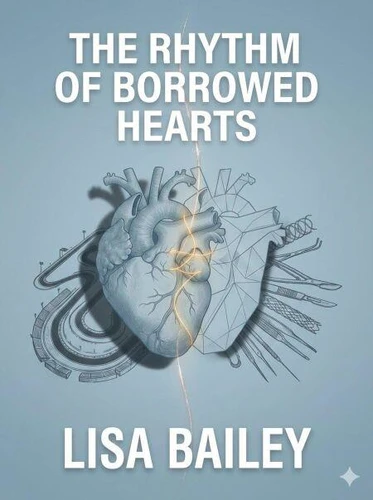
Signe Geller spent her life in pursuit of the perfect split-second, a machine of muscle and grit until her own heart betrayed her. Bram de Graaf was a man of glass and steel, an architect who believed he could design a life immune to collapse-until his wife, Viveca, was stolen in a sudden, violent instant. When Viveca's heart begins to beat inside Signe's chest, it isn't just a medical miracle; it is a physical tether between two strangers who should have never met.
For Signe, recovery brings more than just strength; it brings phantom memories of a life she never lived-a taste for raspberries, a love for the rain, and a haunting, magnetic pull toward a man she recognizes only by the rhythm in her own blood. Their connection is a "phantom romance, " a sanctuary built on the blurred lines between biological survival and psychological obsession. As Bram orbits Signe, he is caught in a desperate gravity, unable to discern if he is falling for the woman who survived or the ghost of the woman he lost.
Signe, struggling to reclaim her identity from the cellular echoes of a dead woman, finds in Bram the only person who truly hears the music of her new pulse. Together, they flee the sterile expectations of her athletic career and the cold, predatory grief of Viveca's mother, seeking refuge in a remote mountain cabin where the only clock that matters is the one beating between them. But the world views their bond as a scandal, a "theft" of legacy that culminates in a public battle for Signe's autonomy.
To save their future, Signe must stand before a judge and a judgmental public to declare that she is not a vessel for a ghost, but a woman who has found a new way to live. Their love is not a return to what was, but a brave, messy integration of two broken histories. It is a story of choosing to live for the person you have become, rather than the ghosts you carry, concluding with a final, unified beat that belongs to neither and both.


 , qui est-ce ?