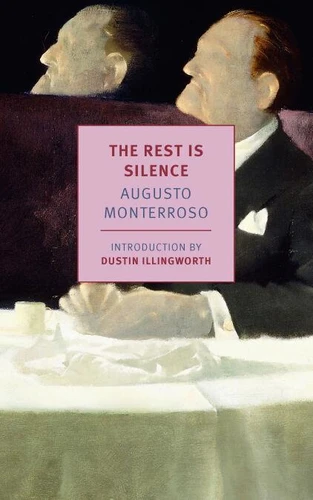
The lone novel by a Latin American author of very short fiction (praised as "the most beautiful stories in the world" by Italo Calvino)-an antic, metafictional send-up of the Mexican literary scene told through the unreliable recollections of an aging critic's friends, relatives, and attendants. The one and only novel by the renowned Guatemalan writer Augusto Monterroso-Latin America's most expansive miniaturist, whose tiny, acid, and bracingly surreal narratives Italo Calvino dubbed "the most beautiful stories in the world"-The Rest Is Silence presents the reader with the kaleidoscopic portrait of a provincial Mexican literary critic, one Eduardo Torres, a sort of Don Quixote of the Sunday supplements, whose colossal misreadings are matched only by the scale of his vanity.
Presented in the form of a festschrift for the aging writer, this rollicking metafiction offers up a bouquet of highly unreliable reminiscences by Torres's friends, relations, and servants (their accounts skewed by envy, ignorance, and sheer malice), along with a generous selection of the savant's own comically botched attempts at "criticism."Monterroso's narrative is a ludicrous dissection of literary self-conceit, a (Groucho) Marxian skewering of the Mexican literary landscape, and perhaps a wry self-portrait by an author who is profoundly sensible of just how high the stakes of the art of criticism really are-and, consequently, of just how far it has to fall.
The lone novel by a Latin American author of very short fiction (praised as "the most beautiful stories in the world" by Italo Calvino)-an antic, metafictional send-up of the Mexican literary scene told through the unreliable recollections of an aging critic's friends, relatives, and attendants. The one and only novel by the renowned Guatemalan writer Augusto Monterroso-Latin America's most expansive miniaturist, whose tiny, acid, and bracingly surreal narratives Italo Calvino dubbed "the most beautiful stories in the world"-The Rest Is Silence presents the reader with the kaleidoscopic portrait of a provincial Mexican literary critic, one Eduardo Torres, a sort of Don Quixote of the Sunday supplements, whose colossal misreadings are matched only by the scale of his vanity.
Presented in the form of a festschrift for the aging writer, this rollicking metafiction offers up a bouquet of highly unreliable reminiscences by Torres's friends, relations, and servants (their accounts skewed by envy, ignorance, and sheer malice), along with a generous selection of the savant's own comically botched attempts at "criticism."Monterroso's narrative is a ludicrous dissection of literary self-conceit, a (Groucho) Marxian skewering of the Mexican literary landscape, and perhaps a wry self-portrait by an author who is profoundly sensible of just how high the stakes of the art of criticism really are-and, consequently, of just how far it has to fall.

 , qui est-ce ?
