
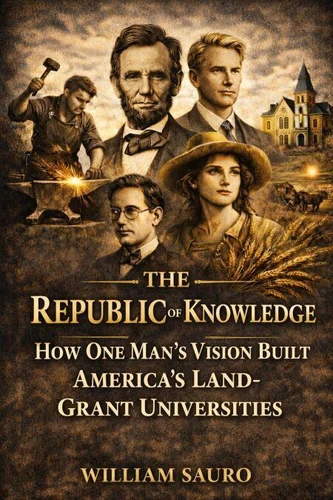
The Republic of Knowledge
Par :Formats :
Disponible dans votre compte client Decitre ou Furet du Nord dès validation de votre commande. Le format ePub est :
- Compatible avec une lecture sur My Vivlio (smartphone, tablette, ordinateur)
- Compatible avec une lecture sur liseuses Vivlio
- Pour les liseuses autres que Vivlio, vous devez utiliser le logiciel Adobe Digital Edition. Non compatible avec la lecture sur les liseuses Kindle, Remarkable et Sony
 , qui est-ce ?
Notre partenaire de plateforme de lecture numérique où vous retrouverez l'ensemble de vos ebooks gratuitement
Pour en savoir plus sur nos ebooks, consultez notre aide en ligne ici
C'est si simple ! Lisez votre ebook avec l'app Vivlio sur votre tablette, mobile ou ordinateur :

- FormatePub
- ISBN8233407369
- EAN9798233407369
- Date de parution16/02/2026
- Protection num.pas de protection
- Infos supplémentairesepub
- ÉditeurLinda Balsamo
Résumé
A Novel of the Fight for America's Land-Grant UniversitiesHe was a blacksmith's son from rural Vermont. He changed the course of American education. In 1810, Justin Morrill was born into a world where opportunity belonged to the few. College was for ministers and the wealthy. Farmers, mechanics, and laborers were expected to work-not to study. But Morrill believed the republic could be more than that.
From the heat of his father's forge to the halls of Congress, The Republic of Knowledge tells the gripping story of how one self-educated shopkeeper reshaped the nation's future. Facing constitutional attacks, political sabotage, and a presidential veto, Morrill spent years fighting to pass a radical idea: that public land should fund public colleges-institutions dedicated not to Latin and theology, but to agriculture, engineering, and the practical sciences that would build a modern nation.
When the Morrill Act finally passed in 1862-amid the chaos of the Civil War-it launched a quiet revolution. The "land-grant" colleges it created would feed a growing country, power industrial expansion, open doors to working-class students, and, over time, extend opportunity to Black Americans and Native communities long excluded from higher education. But the story does not end with victory. Spanning more than a century-from Kansas farm experiments to tribal colleges in Montana to modern budget crises-The Republic of Knowledge traces the enduring question at the heart of American democracy:Who is education for?Sweeping, deeply researched, and written with the urgency of a nation still debating its future, this is the story of the unfinished American promise-and the men and women who continue the fight to keep knowledge in the hands of the many, not the few.
From the heat of his father's forge to the halls of Congress, The Republic of Knowledge tells the gripping story of how one self-educated shopkeeper reshaped the nation's future. Facing constitutional attacks, political sabotage, and a presidential veto, Morrill spent years fighting to pass a radical idea: that public land should fund public colleges-institutions dedicated not to Latin and theology, but to agriculture, engineering, and the practical sciences that would build a modern nation.
When the Morrill Act finally passed in 1862-amid the chaos of the Civil War-it launched a quiet revolution. The "land-grant" colleges it created would feed a growing country, power industrial expansion, open doors to working-class students, and, over time, extend opportunity to Black Americans and Native communities long excluded from higher education. But the story does not end with victory. Spanning more than a century-from Kansas farm experiments to tribal colleges in Montana to modern budget crises-The Republic of Knowledge traces the enduring question at the heart of American democracy:Who is education for?Sweeping, deeply researched, and written with the urgency of a nation still debating its future, this is the story of the unfinished American promise-and the men and women who continue the fight to keep knowledge in the hands of the many, not the few.
A propos de William Sauro

Marine One Down!
E-book
2,99 €
Automated Informant
E-book
2,99 €
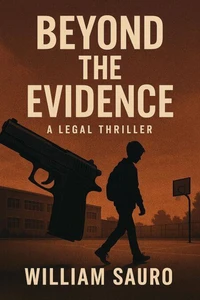
Beyond The Evidence
E-book
2,99 €
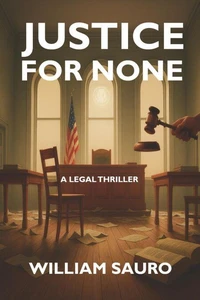
Justice For None
E-book
2,99 €
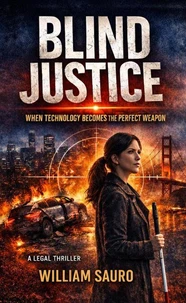
Blind Justice
E-book
2,99 €
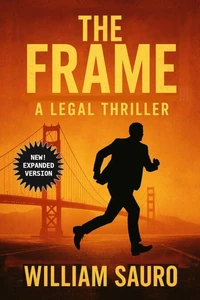
2,99 €