SOLDES
Jusqu'à -70% sur une sélection d'articles*

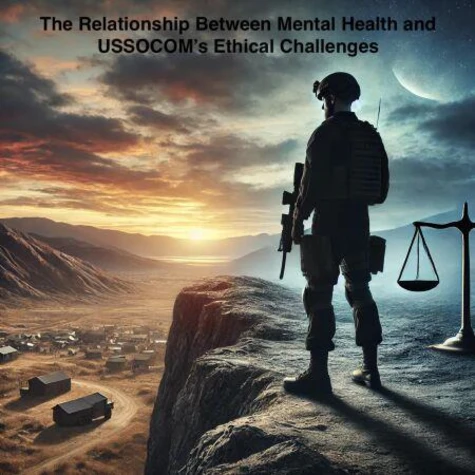
The Relationship Between Mental Health and USSOCOM's Ethical Challenges
Par :Formats :
Disponible dans votre compte client Decitre ou Furet du Nord dès validation de votre commande. Le format ePub est :
- Compatible avec une lecture sur My Vivlio (smartphone, tablette, ordinateur)
- Compatible avec une lecture sur liseuses Vivlio
- Pour les liseuses autres que Vivlio, vous devez utiliser le logiciel Adobe Digital Edition. Non compatible avec la lecture sur les liseuses Kindle, Remarkable et Sony
 , qui est-ce ?
Notre partenaire de plateforme de lecture numérique où vous retrouverez l'ensemble de vos ebooks gratuitement
Pour en savoir plus sur nos ebooks, consultez notre aide en ligne ici
C'est si simple ! Lisez votre ebook avec l'app Vivlio sur votre tablette, mobile ou ordinateur :

- FormatePub
- ISBN8230785279
- EAN9798230785279
- Date de parution01/06/2021
- Protection num.pas de protection
- Infos supplémentairesepub
- ÉditeurIndependently Published
Résumé
The purpose of this thesis is to analyze ways to strengthen the special operations command (SOCOM) force and family by identifying underlying mental health factors that damage human performance, reduce resiliency, and degrade readiness. This research explores the relationship between mental health in terms of post-traumatic stress disorder (PTSD), traumatic brain injury (TBI), and moral injury, and its effects on individual ethics and decision-making.
Nearly twenty years of non-stop global operations have strained SOCOM. Current and past SOCOM policies and programs seeking to improve mental health and ethics have limited effectiveness and fail to produce desired effects. Through case study analysis, three common factors continue to characterize ethical lapses in SOCOM: dishonesty, exceptionalism, and unprofessional behavior. Decision-making impairment resulting from mental health illnesses could offer an explanation into these ethical lapses.
Therefore, this research proposes that SOCOM re-think addressing ethical lapses by taking a preventative approach to mental illness instead of a reactive approach. The goal of this research is not to eliminate mental illness and ethical lapses, but to identify a new way for SOCOM to reduce both.
Nearly twenty years of non-stop global operations have strained SOCOM. Current and past SOCOM policies and programs seeking to improve mental health and ethics have limited effectiveness and fail to produce desired effects. Through case study analysis, three common factors continue to characterize ethical lapses in SOCOM: dishonesty, exceptionalism, and unprofessional behavior. Decision-making impairment resulting from mental health illnesses could offer an explanation into these ethical lapses.
Therefore, this research proposes that SOCOM re-think addressing ethical lapses by taking a preventative approach to mental illness instead of a reactive approach. The goal of this research is not to eliminate mental illness and ethical lapses, but to identify a new way for SOCOM to reduce both.