SOLDES
Jusqu'à -70% sur une sélection d'articles*

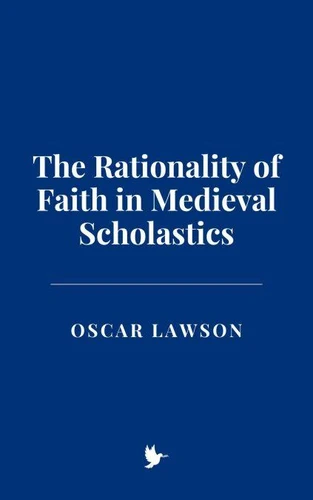
The Rationality of Faith in Medieval Scholastics
Par :Formats :
Disponible dans votre compte client Decitre ou Furet du Nord dès validation de votre commande. Le format ePub est :
- Compatible avec une lecture sur My Vivlio (smartphone, tablette, ordinateur)
- Compatible avec une lecture sur liseuses Vivlio
- Pour les liseuses autres que Vivlio, vous devez utiliser le logiciel Adobe Digital Edition. Non compatible avec la lecture sur les liseuses Kindle, Remarkable et Sony
 , qui est-ce ?
Notre partenaire de plateforme de lecture numérique où vous retrouverez l'ensemble de vos ebooks gratuitement
Pour en savoir plus sur nos ebooks, consultez notre aide en ligne ici
C'est si simple ! Lisez votre ebook avec l'app Vivlio sur votre tablette, mobile ou ordinateur :

- FormatePub
- ISBN8230213895
- EAN9798230213895
- Date de parution02/02/2025
- Protection num.pas de protection
- Infos supplémentairesepub
- ÉditeurIndependently Published
Résumé
This book provides a comprehensive exploration of the evolving relationship between faith and reason from the early Christian era through the Middle Ages, the Reformation, and into the Enlightenment. Drawing on key philosophical and theological figures such as Augustine, Thomas Aquinas, Anselm of Canterbury, and Martin Luther, it traces the intellectual journey of reconciling belief in divine revelation with human reason, while examining the development of various theological systems and philosophical approaches.
The book discusses the challenges posed by the rise of Scholasticism, the influence of Aristotelian thought, and the increasing tension between faith-based authority and human autonomy that culminated in the intellectual upheavals of the Reformation and Enlightenment. It details how thinkers like Descartes, Hume, and Rousseau reshaped the landscape by asserting the primacy of reason, skepticism about religious authority, and the rise of secularism.
Despite the eventual fragmentation of the harmony between faith and reason, the legacy of medieval thought, particularly the synthesis of divine and natural law, continues to inform modern philosophical, ethical, and theological debates. Through this journey, the book highlights the historical shifts that redefined knowledge, authority, and the human condition, providing a detailed examination of the intellectual forces that shaped Western thought and continue to influence contemporary discussions on the nature of belief, reason, and society.
The book discusses the challenges posed by the rise of Scholasticism, the influence of Aristotelian thought, and the increasing tension between faith-based authority and human autonomy that culminated in the intellectual upheavals of the Reformation and Enlightenment. It details how thinkers like Descartes, Hume, and Rousseau reshaped the landscape by asserting the primacy of reason, skepticism about religious authority, and the rise of secularism.
Despite the eventual fragmentation of the harmony between faith and reason, the legacy of medieval thought, particularly the synthesis of divine and natural law, continues to inform modern philosophical, ethical, and theological debates. Through this journey, the book highlights the historical shifts that redefined knowledge, authority, and the human condition, providing a detailed examination of the intellectual forces that shaped Western thought and continue to influence contemporary discussions on the nature of belief, reason, and society.
A propos de Oscar Lawson





2,99 €