SOLDES
Jusqu'à -70% sur une sélection d'articles*

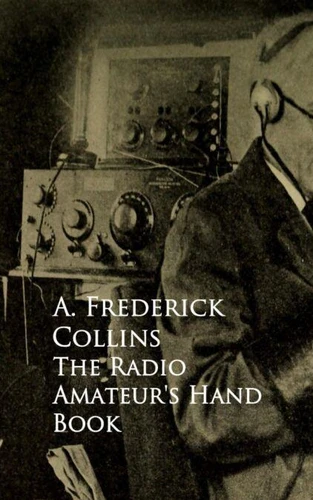
The Radio Amateur's Hand Book
Par :Formats :
Disponible dans votre compte client Decitre ou Furet du Nord dès validation de votre commande. Le format ePub est :
- Compatible avec une lecture sur My Vivlio (smartphone, tablette, ordinateur)
- Compatible avec une lecture sur liseuses Vivlio
- Pour les liseuses autres que Vivlio, vous devez utiliser le logiciel Adobe Digital Edition. Non compatible avec la lecture sur les liseuses Kindle, Remarkable et Sony
 , qui est-ce ?
Notre partenaire de plateforme de lecture numérique où vous retrouverez l'ensemble de vos ebooks gratuitement
Pour en savoir plus sur nos ebooks, consultez notre aide en ligne ici
C'est si simple ! Lisez votre ebook avec l'app Vivlio sur votre tablette, mobile ou ordinateur :

- Nombre de pages500
- FormatePub
- ISBN978-3-7364-0792-3
- EAN9783736407923
- Date de parution13/08/2016
- Protection num.Digital Watermarking
- Taille5 Mo
- Infos supplémentairesepub
- ÉditeurAndhof
Résumé
Before delving into the mysteries of receiving and sending messages without wires, a word as to the history of the art and its present day applications may be of service. While popular interest in the subject has gone forward by leaps and bounds within the last two or three years, it has been a matter of scientific experiment for more than a quarter of a century.
The wireless telegraph was invented by William Marconi, at Bologna, Italy, in 1896, and in his first experiments he sent dot and dash signals to a distance of 200 or 300 feet.
The wireless telephone was invented by the author of this book at Narberth, Penn., in 1899, and in his first experiments the human voice was transmitted to a distance of three blocks. The first vital experiments that led up to the invention of the wireless telegraph were made by Heinrich Hertz, of Germany, in 1888 when he showed that the spark of an induction coil set up electric oscillations in an open circuit, and that the energy of these waves was, in turn, sent out in the form of electric waves.
He also showed how they could be received at a distance by means of a ring detector, which he called a resonator.
The wireless telephone was invented by the author of this book at Narberth, Penn., in 1899, and in his first experiments the human voice was transmitted to a distance of three blocks. The first vital experiments that led up to the invention of the wireless telegraph were made by Heinrich Hertz, of Germany, in 1888 when he showed that the spark of an induction coil set up electric oscillations in an open circuit, and that the energy of these waves was, in turn, sent out in the form of electric waves.
He also showed how they could be received at a distance by means of a ring detector, which he called a resonator.