SOLDES
Jusqu'à -70% sur une sélection d'articles*

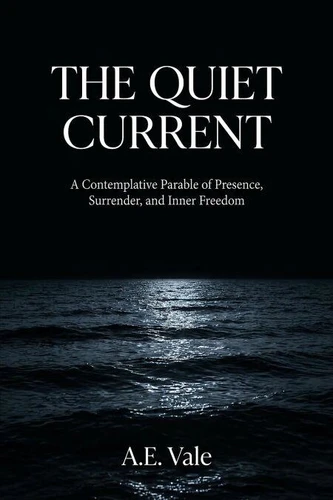
The Quiet Current: A Contemplative Parable of Presence, Surrender, and Inner Freedom
Par :Formats :
Disponible dans votre compte client Decitre ou Furet du Nord dès validation de votre commande. Le format ePub est :
- Compatible avec une lecture sur My Vivlio (smartphone, tablette, ordinateur)
- Compatible avec une lecture sur liseuses Vivlio
- Pour les liseuses autres que Vivlio, vous devez utiliser le logiciel Adobe Digital Edition. Non compatible avec la lecture sur les liseuses Kindle, Remarkable et Sony
 , qui est-ce ?
Notre partenaire de plateforme de lecture numérique où vous retrouverez l'ensemble de vos ebooks gratuitement
Pour en savoir plus sur nos ebooks, consultez notre aide en ligne ici
C'est si simple ! Lisez votre ebook avec l'app Vivlio sur votre tablette, mobile ou ordinateur :

- FormatePub
- ISBN8235857773
- EAN9798235857773
- Date de parution05/05/2026
- Protection num.pas de protection
- Infos supplémentairesepub
- ÉditeurIoakim Ioakim
Résumé
The Quiet Current: A Contemplative Parable of Presence, Surrender, and Inner Freedom is a quiet, penetrating novel about what happens when a successful life stops feeling inhabitable. Adrian has done everything a capable modern man is supposed to do. He is competent, respected, reliable, and always in motion. He knows how to manage pressure, anticipate problems, soften conflict, and keep the machinery of work and life running smoothly.
Yet beneath that competence, something in him has gone hard. His mind never stops narrating, correcting, planning, defending, and tightening around the next demand. He is outwardly functional and inwardly exhausted. What begins as strain gradually becomes a deeper crisis of identification. A power outage interrupts the office and briefly exposes a quieter world beneath the ordinary noise. A failed relationship lingers in memory.
Time with his aging mother reveals the emotional architecture beneath his busyness. Work pressure, bodily fatigue, private loneliness, and the old reflex to control everything converge until Adrian can no longer avoid the central fact of his life: he has mistaken tension for strength, usefulness for worth, and inner vigilance for love. The book unfolds in three movements. Part I, The Noise, immerses the reader in Adrian's overmanaged life and the compulsive mind that governs it.
Part II, The Undoing, traces the collapse of that false strength through interruption, grief, family, and the exposure of the inward "contracts" he has made with fear and self-protection. Part III, The Quiet Current, does not offer grand transcendence or a spiritual performance. Instead, it reveals something subtler and more radical: a human being slowly learning how to remain present inside ordinary life without fleeing into thought, control, or grasping.
This is not a plot-driven story of external triumph. It is a contemplative parable for readers who know what it means to live with too much inward noise. It explores the silent habits by which people abandon themselves-through overthinking, overfunctioning, anticipation, emotional self-defense, and the endless effort to stay ahead of life. And it asks a deeper question: what remains when the argument with reality begins to end?Written in luminous, meditative prose, The Quiet Current belongs to the territory between literary fiction, spiritual reflection, and psychological awakening.
It will resonate with readers drawn to stillness, surrender, inner freedom, and the hidden costs of modern achievement. Rather than preaching a doctrine, it dramatizes a shift in consciousness: from identification to witnessing, from striving to presence, from inner captivity to a quieter participation in life as it is. At its heart, this is a book about learning to stay. Stay in the room. Stay in the body.
Stay with grief, tenderness, uncertainty, love, and the ordinary moment before the mind converts it into strategy. In Adrian's gradual undoing, the reader encounters a deeper possibility for his or her own life-not perfection, not escape, but a different way of being alive.
Yet beneath that competence, something in him has gone hard. His mind never stops narrating, correcting, planning, defending, and tightening around the next demand. He is outwardly functional and inwardly exhausted. What begins as strain gradually becomes a deeper crisis of identification. A power outage interrupts the office and briefly exposes a quieter world beneath the ordinary noise. A failed relationship lingers in memory.
Time with his aging mother reveals the emotional architecture beneath his busyness. Work pressure, bodily fatigue, private loneliness, and the old reflex to control everything converge until Adrian can no longer avoid the central fact of his life: he has mistaken tension for strength, usefulness for worth, and inner vigilance for love. The book unfolds in three movements. Part I, The Noise, immerses the reader in Adrian's overmanaged life and the compulsive mind that governs it.
Part II, The Undoing, traces the collapse of that false strength through interruption, grief, family, and the exposure of the inward "contracts" he has made with fear and self-protection. Part III, The Quiet Current, does not offer grand transcendence or a spiritual performance. Instead, it reveals something subtler and more radical: a human being slowly learning how to remain present inside ordinary life without fleeing into thought, control, or grasping.
This is not a plot-driven story of external triumph. It is a contemplative parable for readers who know what it means to live with too much inward noise. It explores the silent habits by which people abandon themselves-through overthinking, overfunctioning, anticipation, emotional self-defense, and the endless effort to stay ahead of life. And it asks a deeper question: what remains when the argument with reality begins to end?Written in luminous, meditative prose, The Quiet Current belongs to the territory between literary fiction, spiritual reflection, and psychological awakening.
It will resonate with readers drawn to stillness, surrender, inner freedom, and the hidden costs of modern achievement. Rather than preaching a doctrine, it dramatizes a shift in consciousness: from identification to witnessing, from striving to presence, from inner captivity to a quieter participation in life as it is. At its heart, this is a book about learning to stay. Stay in the room. Stay in the body.
Stay with grief, tenderness, uncertainty, love, and the ordinary moment before the mind converts it into strategy. In Adrian's gradual undoing, the reader encounters a deeper possibility for his or her own life-not perfection, not escape, but a different way of being alive.