SOLDES
Jusqu'à -70% sur une sélection d'articles*

The Queen of Sheba and Her Only Son Menyelek
Par :Formats :
Disponible dans votre compte client Decitre ou Furet du Nord dès validation de votre commande. Le format ePub est :
- Compatible avec une lecture sur My Vivlio (smartphone, tablette, ordinateur)
- Compatible avec une lecture sur liseuses Vivlio
- Pour les liseuses autres que Vivlio, vous devez utiliser le logiciel Adobe Digital Edition. Non compatible avec la lecture sur les liseuses Kindle, Remarkable et Sony
 , qui est-ce ?
Notre partenaire de plateforme de lecture numérique où vous retrouverez l'ensemble de vos ebooks gratuitement
Pour en savoir plus sur nos ebooks, consultez notre aide en ligne ici
C'est si simple ! Lisez votre ebook avec l'app Vivlio sur votre tablette, mobile ou ordinateur :

- Nombre de pages376
- FormatePub
- ISBN978-3-7504-1230-9
- EAN9783750412309
- Date de parution30/10/2019
- Protection num.Digital Watermarking
- Taille4 Mo
- Infos supplémentairesepub
- ÉditeurBooks on Demand
Résumé
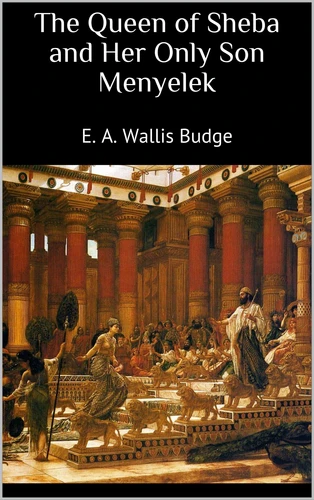
THIS volume contains a complete English translation of the famous Ethiopian work, The "Kebra Nagast, " i.e. the "Glory of the Kings [of Ethiopia]." This work has been held in peculiar honour in Abyssinia for several centuries, and throughout that country it has been, and still is, venerated by the people as containing the final proof of their descent from the Hebrew Patriarchs, and of the kinship of their kings of the Solomonic line with Christ, the Son of God.
The importance of the book, both for the kings and the people of Abyssinia, is clearly shown by the letter that King John of Ethiopia wrote to the late Lord Granville in August, 1872. The king says: "There is a book called 'Kivera Negust' which contains the Law of the whole of Ethiopia, and the names of the Shûms [ i.e. Chiefs], and Churches, and Provinces are in this book. I pray you find out who has got this book, and send it to me, for in my country my people will not obey my orders without it." The first summary of the contents of the Kebra Nagast was published by Bruce as far back as 1813, but little interest was roused by his somewhat bald précis.
And, in spite of the labours of Prætorius, Bezold, and Hugues le Roux, the contents of the work are still practically unknown to the general reader in England. It is hoped that the translation given in the following pages will be of use to those who have not the time or opportunity for perusing the Ethiopic original. The Kebra Nagast is a great storehouse of legends and traditions, some historical and some of a purely folk-lore character, derived from the Old Testament and the later Rabbinic writings, and from Egyptian (both pagan and Christian), Arabian, and Ethiopian sources.
Of the early history of the compilation and its maker, and of its subsequent editors we know nothing, but the principal groundwork of its earliest form was the traditions that were current in Syria, Palestine, Arabia, and Egypt during the first four centuries of the Christian era.
The importance of the book, both for the kings and the people of Abyssinia, is clearly shown by the letter that King John of Ethiopia wrote to the late Lord Granville in August, 1872. The king says: "There is a book called 'Kivera Negust' which contains the Law of the whole of Ethiopia, and the names of the Shûms [ i.e. Chiefs], and Churches, and Provinces are in this book. I pray you find out who has got this book, and send it to me, for in my country my people will not obey my orders without it." The first summary of the contents of the Kebra Nagast was published by Bruce as far back as 1813, but little interest was roused by his somewhat bald précis.
And, in spite of the labours of Prætorius, Bezold, and Hugues le Roux, the contents of the work are still practically unknown to the general reader in England. It is hoped that the translation given in the following pages will be of use to those who have not the time or opportunity for perusing the Ethiopic original. The Kebra Nagast is a great storehouse of legends and traditions, some historical and some of a purely folk-lore character, derived from the Old Testament and the later Rabbinic writings, and from Egyptian (both pagan and Christian), Arabian, and Ethiopian sources.
Of the early history of the compilation and its maker, and of its subsequent editors we know nothing, but the principal groundwork of its earliest form was the traditions that were current in Syria, Palestine, Arabia, and Egypt during the first four centuries of the Christian era.