SOLDES
Jusqu'à -70% sur une sélection d'articles*

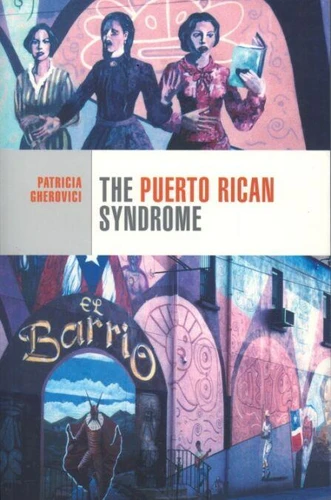
The Puerto Rican Syndrome
Par :Formats :
Disponible dans votre compte client Decitre ou Furet du Nord dès validation de votre commande. Le format ePub protégé est :
- Compatible avec une lecture sur My Vivlio (smartphone, tablette, ordinateur)
- Compatible avec une lecture sur liseuses Vivlio
- Pour les liseuses autres que Vivlio, vous devez utiliser le logiciel Adobe Digital Edition. Non compatible avec la lecture sur les liseuses Kindle, Remarkable et Sony
- Non compatible avec un achat hors France métropolitaine
 , qui est-ce ?
Notre partenaire de plateforme de lecture numérique où vous retrouverez l'ensemble de vos ebooks gratuitement
Pour en savoir plus sur nos ebooks, consultez notre aide en ligne ici
C'est si simple ! Lisez votre ebook avec l'app Vivlio sur votre tablette, mobile ou ordinateur :

- Nombre de pages320
- FormatePub
- ISBN978-1-59051-429-0
- EAN9781590514290
- Date de parution04/05/2010
- Protection num.Adobe DRM
- Taille2 Mo
- Infos supplémentairesepub
- ÉditeurOther Press Professional
Résumé
Winner of the Gradiva Award in Historical Cultural and Literary Analysis and The 2004 Boyer Prize for Contributions to Psychoanalytic Anthropology During the 1950's, US Army medical officers noted a new and puzzling syndrome that contemporary psychiatry could neither explain nor cure. These doctors reported that Puerto Rican soldiers under stress behaved in a very peculiar and dramatic manner, exhibiting a theatrical form of pseudo-epilepsy.
Startled physicians observed frightened and disoriented patients foaming at the mouth, screaming, biting, kicking, shaking in seizures, and fainting. The phenomenon seemed to correspond to a serious neurological disease yet, as with some forms of hysteria, physical examination failed to identify any sign of an organic origin. This unusual set of symptoms, entered into medical records as "a group of striking psychopathological reaction patterns, precipitated by minor stress, " and was designated "Puerto Rican Syndrome." In this lucid and sophisticated new work, Patricia Gherovici thoroughly examines the so-called Puerto Rican Syndrome in the contemporary world, its social and cultural implications for the growing Hispanic population in the US and, therefore, for the US as a whole.
As a mental illness that is, allegedly, uniquely Puerto Rican, this syndrome links nationality and culture to a psychiatric disease whose reappearance recalls the spectacular hysteria that led to the discovery of the unconscious and the birth of psychoanalysis. Gherovici beautifully and systematically uses the combined insights of Freud and Lacan to examine the current state of psychoanalysis and the Hispanic community in America.
Blending these insights with history, current events, and her own case material, Gherovici provides a startling, fresh look at Puerto Rican Syndrome as social and cultural phenomenon. She sheds new light on the future of American society and argues that psychoanalysis is not only possible, but much needed in the ghetto.
Startled physicians observed frightened and disoriented patients foaming at the mouth, screaming, biting, kicking, shaking in seizures, and fainting. The phenomenon seemed to correspond to a serious neurological disease yet, as with some forms of hysteria, physical examination failed to identify any sign of an organic origin. This unusual set of symptoms, entered into medical records as "a group of striking psychopathological reaction patterns, precipitated by minor stress, " and was designated "Puerto Rican Syndrome." In this lucid and sophisticated new work, Patricia Gherovici thoroughly examines the so-called Puerto Rican Syndrome in the contemporary world, its social and cultural implications for the growing Hispanic population in the US and, therefore, for the US as a whole.
As a mental illness that is, allegedly, uniquely Puerto Rican, this syndrome links nationality and culture to a psychiatric disease whose reappearance recalls the spectacular hysteria that led to the discovery of the unconscious and the birth of psychoanalysis. Gherovici beautifully and systematically uses the combined insights of Freud and Lacan to examine the current state of psychoanalysis and the Hispanic community in America.
Blending these insights with history, current events, and her own case material, Gherovici provides a startling, fresh look at Puerto Rican Syndrome as social and cultural phenomenon. She sheds new light on the future of American society and argues that psychoanalysis is not only possible, but much needed in the ghetto.