SOLDES
Jusqu'à -70% sur une sélection d'articles*

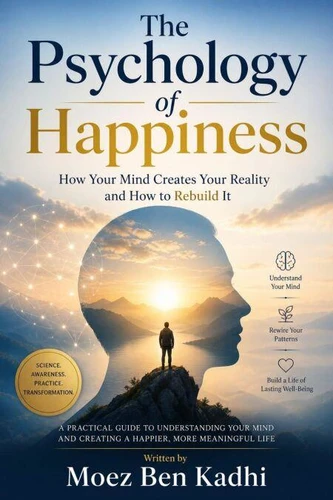
The Psychology of Happiness
Par :Formats :
Disponible dans votre compte client Decitre ou Furet du Nord dès validation de votre commande. Le format ePub est :
- Compatible avec une lecture sur My Vivlio (smartphone, tablette, ordinateur)
- Compatible avec une lecture sur liseuses Vivlio
- Pour les liseuses autres que Vivlio, vous devez utiliser le logiciel Adobe Digital Edition. Non compatible avec la lecture sur les liseuses Kindle, Remarkable et Sony
 , qui est-ce ?
Notre partenaire de plateforme de lecture numérique où vous retrouverez l'ensemble de vos ebooks gratuitement
Pour en savoir plus sur nos ebooks, consultez notre aide en ligne ici
C'est si simple ! Lisez votre ebook avec l'app Vivlio sur votre tablette, mobile ou ordinateur :

- FormatePub
- ISBN8233332487
- EAN9798233332487
- Date de parution03/05/2026
- Protection num.pas de protection
- Infos supplémentairesepub
- ÉditeurLinda Balsamo
Résumé
Happiness is one of the most pursued and least understood concepts in human life. It is invoked in political discourse, promised in advertising, and endlessly analyzed in psychology, yet it remains elusive in practice. Despite unprecedented access to comfort, technology, and opportunity, many individuals report persistent dissatisfaction, anxiety, and a sense of disconnection. This paradox raises a fundamental question: if the conditions for happiness have improved, why has the experience of happiness not followed at the same pace?A common explanation lies in the way happiness has been framed.
In contemporary culture, it is often treated as an outcome, something to be achieved through external success, material acquisition, or social validation. This perspective reduces happiness to a fragile and conditional state, dependent on circumstances that are inherently unstable. Psychological research, however, suggests a different interpretation: happiness is less a result of what happens to us and more a function of how we relate to what happens.
This book begins with a simple but powerful premise: a happy life is not accidental. It emerges from patterns of thought, perception, and behavior that can be understood, examined, and intentionally shaped. In this sense, happiness is not merely an emotion but a structure, a system of internal processes that influence how reality is experienced. Within the field of Positive Psychology, scholars such as Martin Seligman have distinguished between fleeting pleasure and deeper forms of well-being rooted in meaning, engagement, and relationships.
Similarly, the humanistic tradition, represented by thinkers like Abraham Maslow and Carl Rogers, emphasizes authenticity, self-realization, and the importance of aligning one's life with intrinsic values. These perspectives converge on a critical insight: sustainable happiness is not found in external accumulation but in internal organization.
In contemporary culture, it is often treated as an outcome, something to be achieved through external success, material acquisition, or social validation. This perspective reduces happiness to a fragile and conditional state, dependent on circumstances that are inherently unstable. Psychological research, however, suggests a different interpretation: happiness is less a result of what happens to us and more a function of how we relate to what happens.
This book begins with a simple but powerful premise: a happy life is not accidental. It emerges from patterns of thought, perception, and behavior that can be understood, examined, and intentionally shaped. In this sense, happiness is not merely an emotion but a structure, a system of internal processes that influence how reality is experienced. Within the field of Positive Psychology, scholars such as Martin Seligman have distinguished between fleeting pleasure and deeper forms of well-being rooted in meaning, engagement, and relationships.
Similarly, the humanistic tradition, represented by thinkers like Abraham Maslow and Carl Rogers, emphasizes authenticity, self-realization, and the importance of aligning one's life with intrinsic values. These perspectives converge on a critical insight: sustainable happiness is not found in external accumulation but in internal organization.