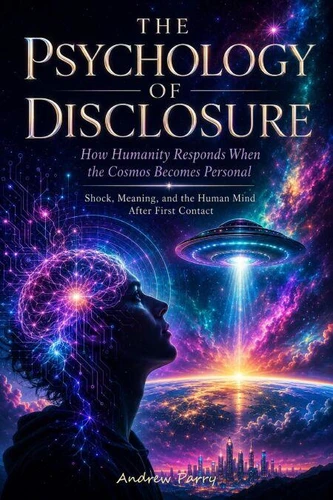
For generations, humanity has looked toward the stars and asked whether we are alone. The question has inspired science, religion, philosophy, fear, hope, and endless speculation. But the real challenge may not be discovering that another intelligence exists. It may be learning how to live with the knowledge. The Psychology of Disclosure explores what could happen when governments, scientists, or direct public evidence confirm the existence of non-human intelligence beyond reasonable doubt.
The announcement would not simply add one extraordinary fact to human knowledge. It could disrupt identity, religion, politics, science, media, family life, and the stories through which humanity understands its place in the universe. Some people would experience wonder, relief, and vindication. Others could feel fear, grief, anger, betrayal, or spiritual confusion. Governments may struggle to explain what they knew and why information was withheld.
Religious communities could adapt, resist, or renew themselves. New contact movements might emerge, offering meaning and planetary unity, while authoritarian cults exploit uncertainty through claims of exclusive cosmic revelation. Drawing upon established research in psychology, sociology, disaster studies, crisis communication, religion, media studies, identity, trauma, and collective behavior, this book examines the emotional and social consequences of a future disclosure event.
It separates evidence-based psychological principles from unsupported assumptions about extraterrestrial motives and avoids the two most common myths surrounding contact. The first myth is that humanity would immediately collapse into panic, violence, and chaos. Disaster research repeatedly shows that people often cooperate under pressure, protect strangers, share information, and create unexpected networks of support.
The second myth is that disclosure would instantly unite humanity, end war, transform consciousness, and begin a golden age. A larger universe would not erase human conflict. It would expose it. Across thirty-four chapters, The Psychology of Disclosure examines ontological shock, cognitive dissonance, denial, information overload, anxiety, sleeplessness, grief, human exceptionalism, religious adaptation, conspiracy thinking, moral panic, children, family resilience, mental-health preparation, media framing, and the long process of learning to live in an inhabited cosmos.
It asks difficult but necessary questions. How would parents explain disclosure to children? Could faith survive beneath an inhabited sky? Why might governments fear public panic more than the public itself? How would social media influence the first seventy-two hours? What happens when genuine secrecy makes every conspiracy seem possible? Could advanced visitors be mistaken for gods? Who would have the authority to speak for Earth? How should humanity respond if another civilization offers technology, medicine, or knowledge capable of transforming the world?Most importantly, what does it mean to become contact-ready?Contact readiness is not technological superiority, spiritual status, or blind acceptance of every extraordinary claim.
It is the ability to verify evidence, tolerate uncertainty, protect rights, resist manipulation, manage fear, preserve dignity, and meet radical difference without collapsing into worship or aggression. The Psychology of Disclosure does not predict when disclosure will occur or claim to know the nature of any possible visitors. It presents a serious framework for understanding the human side of the greatest revelation our species may ever face.
The stars may one day provide the evidence. The real test will be what happens inside us when they do.
For generations, humanity has looked toward the stars and asked whether we are alone. The question has inspired science, religion, philosophy, fear, hope, and endless speculation. But the real challenge may not be discovering that another intelligence exists. It may be learning how to live with the knowledge. The Psychology of Disclosure explores what could happen when governments, scientists, or direct public evidence confirm the existence of non-human intelligence beyond reasonable doubt.
The announcement would not simply add one extraordinary fact to human knowledge. It could disrupt identity, religion, politics, science, media, family life, and the stories through which humanity understands its place in the universe. Some people would experience wonder, relief, and vindication. Others could feel fear, grief, anger, betrayal, or spiritual confusion. Governments may struggle to explain what they knew and why information was withheld.
Religious communities could adapt, resist, or renew themselves. New contact movements might emerge, offering meaning and planetary unity, while authoritarian cults exploit uncertainty through claims of exclusive cosmic revelation. Drawing upon established research in psychology, sociology, disaster studies, crisis communication, religion, media studies, identity, trauma, and collective behavior, this book examines the emotional and social consequences of a future disclosure event.
It separates evidence-based psychological principles from unsupported assumptions about extraterrestrial motives and avoids the two most common myths surrounding contact. The first myth is that humanity would immediately collapse into panic, violence, and chaos. Disaster research repeatedly shows that people often cooperate under pressure, protect strangers, share information, and create unexpected networks of support.
The second myth is that disclosure would instantly unite humanity, end war, transform consciousness, and begin a golden age. A larger universe would not erase human conflict. It would expose it. Across thirty-four chapters, The Psychology of Disclosure examines ontological shock, cognitive dissonance, denial, information overload, anxiety, sleeplessness, grief, human exceptionalism, religious adaptation, conspiracy thinking, moral panic, children, family resilience, mental-health preparation, media framing, and the long process of learning to live in an inhabited cosmos.
It asks difficult but necessary questions. How would parents explain disclosure to children? Could faith survive beneath an inhabited sky? Why might governments fear public panic more than the public itself? How would social media influence the first seventy-two hours? What happens when genuine secrecy makes every conspiracy seem possible? Could advanced visitors be mistaken for gods? Who would have the authority to speak for Earth? How should humanity respond if another civilization offers technology, medicine, or knowledge capable of transforming the world?Most importantly, what does it mean to become contact-ready?Contact readiness is not technological superiority, spiritual status, or blind acceptance of every extraordinary claim.
It is the ability to verify evidence, tolerate uncertainty, protect rights, resist manipulation, manage fear, preserve dignity, and meet radical difference without collapsing into worship or aggression. The Psychology of Disclosure does not predict when disclosure will occur or claim to know the nature of any possible visitors. It presents a serious framework for understanding the human side of the greatest revelation our species may ever face.
The stars may one day provide the evidence. The real test will be what happens inside us when they do.

 , qui est-ce ?