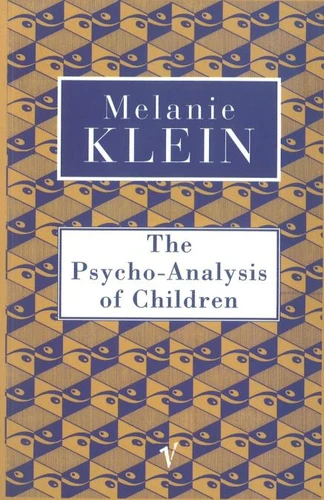



The Psycho-Analysis of Children

Par : Melanie Klein
Offrir maintenant
Ou planifier dans votre panier
Disponible dans votre compte client Decitre ou Furet du Nord dès validation de votre commande. Le format ePub protégé est :
  • Compatible avec une lecture sur My Vivlio (smartphone, tablette, ordinateur)
  • Compatible avec une lecture sur liseuses Vivlio
  • Pour les liseuses autres que Vivlio, vous devez utiliser le logiciel Adobe Digital Edition. Non compatible avec la lecture sur les liseuses Kindle, Remarkable et Sony
  • Non compatible avec un achat hors France métropolitaine
Logo Vivlio, qui est-ce ?

Notre partenaire de plateforme de lecture numérique où vous retrouverez l'ensemble de vos ebooks gratuitement

Pour en savoir plus sur nos ebooks, consultez notre aide en ligne ici
C'est si simple ! Lisez votre ebook avec l'app Vivlio sur votre tablette, mobile ou ordinateur :
Google PlayApp Store
  • Nombre de pages352
  • FormatePub
  • ISBN978-1-4464-7641-3
  • EAN9781446476413
  • Date de parution08/06/2011
  • Protection num.Adobe DRM
  • Infos supplémentairesepub
  • ÉditeurVintage Digital

Résumé

The Psycho-Analysis of Children, first published in 1932, is a classic in its subject, and revolutionised child analysis. Melanie Klein had already proved, by the special technique she devised, that she was a pioneer in that branch of analysis. She made possible the extension of psycho-analysis to the field of early childhood, and in this way not only made the treatment of young children possible but also threw new light on psychological development in childhood and on the roots of adult neuroses and psychoses.
Melanie Klein was born in Vienna in 1882. At about fourteen she decided to study medicine. With her brother's help she learned enough Greek and Latin to pass into the Gymnasium. But her early engagement and subsequent marriage in 1903 brought a halt to her plans. Years later, discovering a booklet on dreams by Freud, she turned her attention to psychoanalysis. At this time she was living in Budapest and began her own analysis with Ferenczi, who encouraged her interest in the analysis of children.
In 1921 she moved to Berlin to continue her work with children, supported by Dr Karl Abraham. In 1926 she moved to London where she worked and lived until her death in 1960.