Eorge Boreas is a Canadian expat living in Shanghai, China. He was born in the Balkans. He has a professional background in engineering and business, and he now teaches economics. He moonlights as as an amateur boxer and a writer of short stories, novels, and essays on René Girard's mimetic theory.
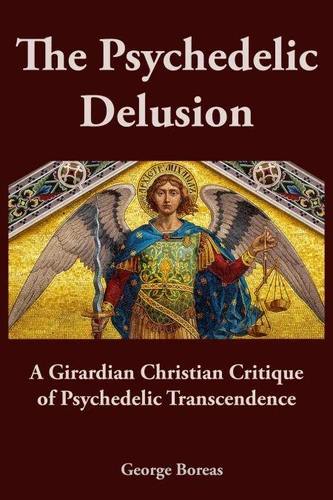
The Psychedelic Delusion
Par :Formats :
Disponible dans votre compte client Decitre ou Furet du Nord dès validation de votre commande. Le format ePub est :
- Compatible avec une lecture sur My Vivlio (smartphone, tablette, ordinateur)
- Compatible avec une lecture sur liseuses Vivlio
- Pour les liseuses autres que Vivlio, vous devez utiliser le logiciel Adobe Digital Edition. Non compatible avec la lecture sur les liseuses Kindle, Remarkable et Sony
 , qui est-ce ?
Notre partenaire de plateforme de lecture numérique où vous retrouverez l'ensemble de vos ebooks gratuitement
Pour en savoir plus sur nos ebooks, consultez notre aide en ligne ici
C'est si simple ! Lisez votre ebook avec l'app Vivlio sur votre tablette, mobile ou ordinateur :

- FormatePub
- ISBN8230549826
- EAN9798230549826
- Date de parution16/10/2025
- Protection num.pas de protection
- Infos supplémentairesepub
- ÉditeurIndependently Published
Résumé
The essay responds to the question of what the anthropological theories of René Girard and his Christian apologetics reveal about the "Psychedelic Renaissance, " the contemporary reemergence of scientific, medical, philosophical, and cultural interest in psychedelic drugs such as magic mushrooms (psilocybin), ayahuasca (DMT), acid (LSD), and others. Part 1 critiques Terence McKenna's "Stoned Aped Theory" of the biological origin of the human species (hominization) in light of the competing theory of René Girard on the same topic.
Part 2 proposes where and how psychedelic drugs fit, historically, in Girard's anthropological scheme: as psychological aids in ritual. Part 3 investigates the transcendental vision behind contemporary advocacy of psychedelic drugs, presenting it as a quintessentially modern revision of the historical role of altering the states of consciousness. Part 4 elaborates on the nature of transcendental or sacred or divine visions as they arise out of archaic and pagan ritual, drawing parallels between it and the psychedelic transcendental.
Finally, Part 5 investigates the several motivations and consequences observable within the Psychedelic Renaissance movement and judges them from the viewpoint of Girard's Christian anthropology and Christian theology in general.
Part 2 proposes where and how psychedelic drugs fit, historically, in Girard's anthropological scheme: as psychological aids in ritual. Part 3 investigates the transcendental vision behind contemporary advocacy of psychedelic drugs, presenting it as a quintessentially modern revision of the historical role of altering the states of consciousness. Part 4 elaborates on the nature of transcendental or sacred or divine visions as they arise out of archaic and pagan ritual, drawing parallels between it and the psychedelic transcendental.
Finally, Part 5 investigates the several motivations and consequences observable within the Psychedelic Renaissance movement and judges them from the viewpoint of Girard's Christian anthropology and Christian theology in general.