SOLDES
Jusqu'à -70% sur une sélection d'articles*

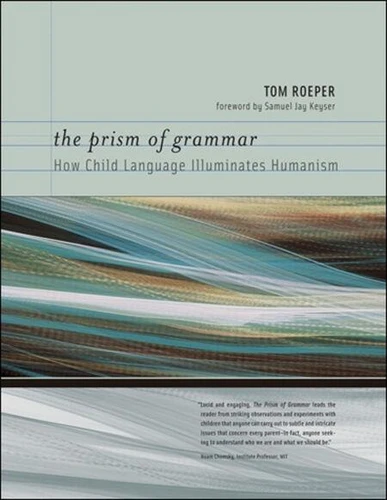
The Prism of Grammar. How Child Language Illuminates Humanism
Par :Formats :
Disponible dans votre compte client Decitre ou Furet du Nord dès validation de votre commande. Le format ePub protégé est :
- Compatible avec une lecture sur My Vivlio (smartphone, tablette, ordinateur)
- Compatible avec une lecture sur liseuses Vivlio
- Pour les liseuses autres que Vivlio, vous devez utiliser le logiciel Adobe Digital Edition. Non compatible avec la lecture sur les liseuses Kindle, Remarkable et Sony
- Non compatible avec un achat hors France métropolitaine
 , qui est-ce ?
Notre partenaire de plateforme de lecture numérique où vous retrouverez l'ensemble de vos ebooks gratuitement
Pour en savoir plus sur nos ebooks, consultez notre aide en ligne ici
C'est si simple ! Lisez votre ebook avec l'app Vivlio sur votre tablette, mobile ou ordinateur :

- Nombre de pages376
- FormatePub
- ISBN978-0-262-25058-0
- EAN9780262250580
- Date de parution13/02/2009
- Protection num.Adobe DRM
- Taille2 Mo
- Infos supplémentairesepub
- ÉditeurBradford Books
Résumé
Exploring the creativity of mind through children's language: how the tiniest utterances can illustrate the simple but abstract principles behind modern grammar-and reveal the innate structures of the mind. Every sentence we hear is instantly analyzed by an inner grammar; just as a prism refracts a beam of light, grammar divides a stream of sound, linking diverse strings of information to different domains of mind-memory, vision, emotions, intentions.
In The Prism of Grammar, Tom Roeper brings the abstract principles behind modern grammar to life by exploring the astonishing intricacies of child language. Adult expressions provide endless puzzles for the child to solve. The individual child's solutions ("Don't uncomfortable the cat" is one example) may amuse adults but they also reveal the complexity of language and the challenges of mastering it.
The tiniest utterances, says Roeper, reflect the whole mind and engage the child's free will and sense of dignity. He offers numerous and novel "explorations"-many at the cutting edge of current work-that anyone can try, even in conversation around the dinner table. They elicit how the child confronts "recursion"-the heartbeat of grammar-through endless possessives ("John's mother's friend's car"), mysterious plurals, contradictory adjectives, the marvels of ellipsis, and the deep obscurity of reference ("there it is, right here").
They are not tests of skill; they are tools for discovery and delight, not diagnosis. Each chapter on acquisition begins with a commonsense look at how structures work-moving from the simple to the complex-and then turns to the literary and human dimensions of grammar. One important human dimension is the role of dialect in society and in the lives of children. Roeper devotes three chapters to the structure of African-American English and the challenge of responding to linguistic prejudice.
Written in a lively style, accessible and gently provocative, The Prism of Grammar is for parents and teachers as well as students-for everyone who wants to understand how children gain and use language-and anyone interested in the social, philosophical, and ethical implications of how we see the growing mind emerge.
In The Prism of Grammar, Tom Roeper brings the abstract principles behind modern grammar to life by exploring the astonishing intricacies of child language. Adult expressions provide endless puzzles for the child to solve. The individual child's solutions ("Don't uncomfortable the cat" is one example) may amuse adults but they also reveal the complexity of language and the challenges of mastering it.
The tiniest utterances, says Roeper, reflect the whole mind and engage the child's free will and sense of dignity. He offers numerous and novel "explorations"-many at the cutting edge of current work-that anyone can try, even in conversation around the dinner table. They elicit how the child confronts "recursion"-the heartbeat of grammar-through endless possessives ("John's mother's friend's car"), mysterious plurals, contradictory adjectives, the marvels of ellipsis, and the deep obscurity of reference ("there it is, right here").
They are not tests of skill; they are tools for discovery and delight, not diagnosis. Each chapter on acquisition begins with a commonsense look at how structures work-moving from the simple to the complex-and then turns to the literary and human dimensions of grammar. One important human dimension is the role of dialect in society and in the lives of children. Roeper devotes three chapters to the structure of African-American English and the challenge of responding to linguistic prejudice.
Written in a lively style, accessible and gently provocative, The Prism of Grammar is for parents and teachers as well as students-for everyone who wants to understand how children gain and use language-and anyone interested in the social, philosophical, and ethical implications of how we see the growing mind emerge.