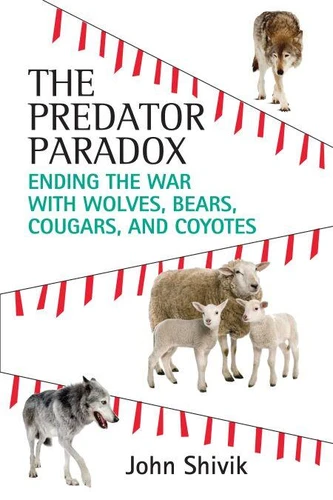
The Predator Paradox. Ending the War with Wolves, Bears, Cougars, and Coyotes
Par :Formats :
Disponible dans votre compte client Decitre ou Furet du Nord dès validation de votre commande. Le format ePub protégé est :
- Compatible avec une lecture sur My Vivlio (smartphone, tablette, ordinateur)
- Compatible avec une lecture sur liseuses Vivlio
- Pour les liseuses autres que Vivlio, vous devez utiliser le logiciel Adobe Digital Edition. Non compatible avec la lecture sur les liseuses Kindle, Remarkable et Sony
- Non compatible avec un achat hors France métropolitaine
 , qui est-ce ?
Notre partenaire de plateforme de lecture numérique où vous retrouverez l'ensemble de vos ebooks gratuitement
Pour en savoir plus sur nos ebooks, consultez notre aide en ligne ici
C'est si simple ! Lisez votre ebook avec l'app Vivlio sur votre tablette, mobile ou ordinateur :

- Nombre de pages208
- FormatePub
- ISBN978-0-8070-8497-7
- EAN9780807084977
- Date de parution13/05/2014
- Protection num.Adobe DRM
- Taille521 Ko
- Infos supplémentairesepub
- ÉditeurBeacon Press
Résumé
An expert in wildlife management tells the stories of those who are finding new ways for humans and mammalian predators to coexist. Stories of backyard bears and cat-eating coyotes are becoming increasingly common-even for people living in non-rural areas. Farmers anxious to protect their sheep from wolves aren't the only ones concerned: suburbanites and city dwellers are also having more unwanted run-ins with mammalian predators.
And that might not be a bad thing. After all, our government has been at war with wildlife since 1914, and the death toll has been tremendous: federal agents kill a combined ninety thousand wolves, bears, coyotes, and cougars every year, often with dubious biological effectiveness. Only recently have these species begun to recover. Given improved scientific understanding and methods, can we continue to slow the slaughter and allow populations of mammalian predators to resume their positions as keystone species? As carnivore populations increase, however, their proximity to people, pets, and livestock leads to more conflict, and we are once again left to negotiate the uneasy terrain between elimination and conservation.
In The Predator Paradox, veteran wildlife management expert John Shivik argues that we can end the war while still preserving and protecting these key species as fundamental components of healthy ecosystems. By reducing almost sole reliance on broad scale "death from above" tactics and by incorporating nonlethal approaches to managing wildlife-from electrified flagging to motion-sensor lights-we can dismantle the paradox, have both people and predators on the landscape, and ensure the long-term survival of both.
As the boundary between human and animal habitat blurs, preventing human-wildlife conflict depends as much on changing animal behavior as on changing our own perceptions, attitudes, and actions. To that end, Shivik focuses on the facts, mollifies fears, and presents a variety of tools and tactics for consideration. Blending the science of the wild with entertaining and dramatic storytelling, Shivik's clear-eyed pragmatism allows him to appeal to both sides of the debate, while arguing for the possibility of coexistence: between ranchers and environmentalists, wildlife managers and animal-welfare activists, and humans and animals.
And that might not be a bad thing. After all, our government has been at war with wildlife since 1914, and the death toll has been tremendous: federal agents kill a combined ninety thousand wolves, bears, coyotes, and cougars every year, often with dubious biological effectiveness. Only recently have these species begun to recover. Given improved scientific understanding and methods, can we continue to slow the slaughter and allow populations of mammalian predators to resume their positions as keystone species? As carnivore populations increase, however, their proximity to people, pets, and livestock leads to more conflict, and we are once again left to negotiate the uneasy terrain between elimination and conservation.
In The Predator Paradox, veteran wildlife management expert John Shivik argues that we can end the war while still preserving and protecting these key species as fundamental components of healthy ecosystems. By reducing almost sole reliance on broad scale "death from above" tactics and by incorporating nonlethal approaches to managing wildlife-from electrified flagging to motion-sensor lights-we can dismantle the paradox, have both people and predators on the landscape, and ensure the long-term survival of both.
As the boundary between human and animal habitat blurs, preventing human-wildlife conflict depends as much on changing animal behavior as on changing our own perceptions, attitudes, and actions. To that end, Shivik focuses on the facts, mollifies fears, and presents a variety of tools and tactics for consideration. Blending the science of the wild with entertaining and dramatic storytelling, Shivik's clear-eyed pragmatism allows him to appeal to both sides of the debate, while arguing for the possibility of coexistence: between ranchers and environmentalists, wildlife managers and animal-welfare activists, and humans and animals.