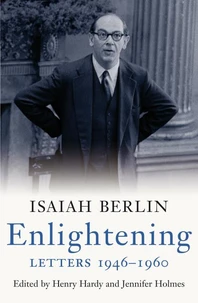



Isaiah Berlin was born in Riga, now capital of Latvia, in 1909. When he was six, his family moved to Russia, and in Petrograd in 1917 Berlin witnessed both Revolutions - Social Democratic and Bolshevik. In 1921 he and his parents emigrated to England, where he was educated at St Paul's School, London, and Corpus Christi College, Oxford. Apart from his war service in New York, Washington, Moscow and Leningrad, he remained at Oxford thereafter - as a Fellow of All Souls, then of New College, as Chichele Professor of Social and Political Theory, and as founding President of Wolfson College.
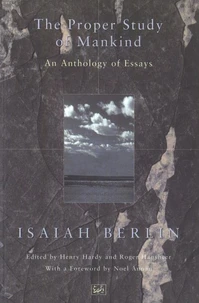
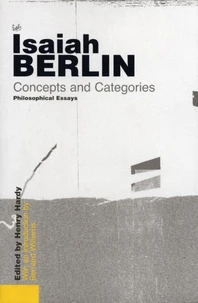
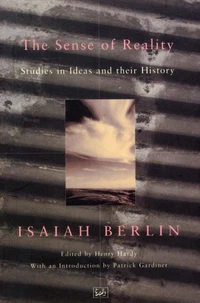
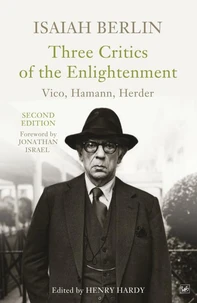
He also held the Presidency of the British Academy. His published work includes Karl Marx, Russian Thinkers, Concepts and Categories, Against the Current, Personal Impressions, The Sense of Reality, The Proper Study of Mankind, The Roots of Romanticism, The Power of Ideas, Three Critics of the Enlightenment, Freedom and Its Betrayal, Liberty, The Soviet Mind and Political Ideas in the Romantic Age.
As an exponent of the history of ideas he was awarded the Erasmus, Lippincott and Agnelli Prizes; he also received the Jerusalem Prize for his lifelong defence of civil liberties. He died in 1997.
He also held the Presidency of the British Academy. His published work includes Karl Marx, Russian Thinkers, Concepts and Categories, Against the Current, Personal Impressions, The Sense of Reality, The Proper Study of Mankind, The Roots of Romanticism, The Power of Ideas, Three Critics of the Enlightenment, Freedom and Its Betrayal, Liberty, The Soviet Mind and Political Ideas in the Romantic Age.
As an exponent of the history of ideas he was awarded the Erasmus, Lippincott and Agnelli Prizes; he also received the Jerusalem Prize for his lifelong defence of civil liberties. He died in 1997.